What Does OEM Mean and Why Does It Matter for Car Parts
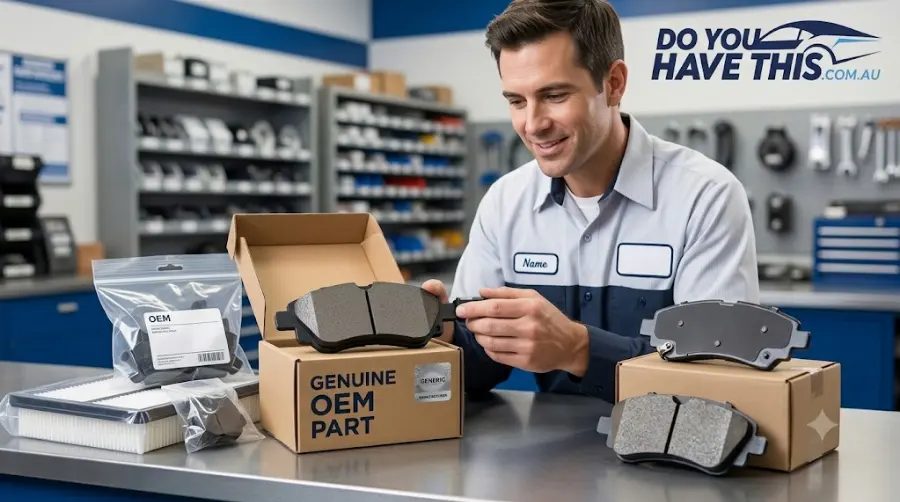
If you've ever searched for replacement car parts, you've probably seen terms like OEM, OE, genuine, and aftermarket. At first glance, they all sound similar. Many drivers assume they're interchangeable, but they actually refer to different types of parts with different purposes.
Understanding what OEM means for car parts is more important than many people realize. Whether you're replacing worn brake pads, repairing damage after an accident, or simply maintaining your vehicle, the type of part you choose can affect fit, reliability, cost, and even long-term maintenance.
For Australian vehicle owners, the decision isn't always about buying the most expensive option. It's about understanding what you're paying for and selecting parts that make sense for your vehicle, driving habits, and budget. This is especially relevant for popular models, where knowing about Toyota HiLux common problems and which parts fail first can help owners choose suitable replacement parts before minor wear turns into a more costly repair.
What Does OEM Mean in Car Parts?
OEM stands for Original Equipment Manufacturer.
In the automotive world, an OEM part is made by the same company that originally manufactured the component used when your vehicle was built. While the vehicle carries the badge of brands like Toyota, Ford, Mazda, or Hyundai, many of the individual components are produced by specialist manufacturers.
For example, a vehicle manufacturer may source:
- Brake systems from one supplier
- Air filters from another
- Suspension components from another
- Electrical parts from another
Those suppliers are the OEM manufacturers.
When people search for the OEM full form car parts, this is exactly what they're referring to: the company that originally produced the equipment installed in the vehicle during manufacturing.
What Does OEM Stand for in Cars?
One common misunderstanding is that OEM means the car manufacturer itself.
That's not always true.
The vehicle manufacturer designs and assembles the vehicle, while many individual parts come from specialized suppliers with decades of expertise in producing specific components.
For example:
- An alternator may be manufactured by one company.
- The fuel pump may come from another.
- The air conditioning compressor could come from a completely different supplier.
These companies manufacture components according to the vehicle maker's specifications.
That's why understanding what OEM stands for in cars helps explain why some replacement parts can be nearly identical to the original components.
What Does OE Mean for Car Parts in Australia?
Australian buyers also come across the term OE or Original Equipment.
Although OEM and OE are often used interchangeably in everyday conversation, there is a subtle difference.
Generally speaking:
- OE part refers to the exact part originally installed on the vehicle during production.
- OEM part refers to a replacement made by the original manufacturer, often sold under the supplier's own brand rather than the vehicle manufacturer's packaging.
In many situations, the physical part is extremely similar or even identical but the branding and packaging may differ. When researching what OE means for car parts in Australia, it's worth checking the supplier, specifications, and compatibility rather than relying only on the label.
The same approach is useful when buying major used components, as knowing how to check if a second-hand gearbox is in good condition can help you avoid costly repairs and ensure you're purchasing a reliable replacement.
OEM vs Genuine Parts: What's the Difference?
One of the biggest sources of confusion is the difference between OEM and genuine parts.
Although they're closely related, they're not necessarily the same.
Genuine Parts
OEM Parts
Sold under the vehicle manufacturer's brand
Made by the original component manufacturer
Usually packaged with the vehicle maker's logo
Often packaged under the supplier's own brand
Generally more expensive
Often slightly less expensive
Manufactured to original specifications
Also manufactured to original specifications
This explains the common discussion around the OEM vs genuine parts difference in Australia.
In many cases:
- The manufacturing process is the same.
- The quality standards are the same.
- The packaging and distribution channels differ.
However, this isn't true for every component, so it's always worth confirming the part number and compatibility.
Why OEM Parts Matter
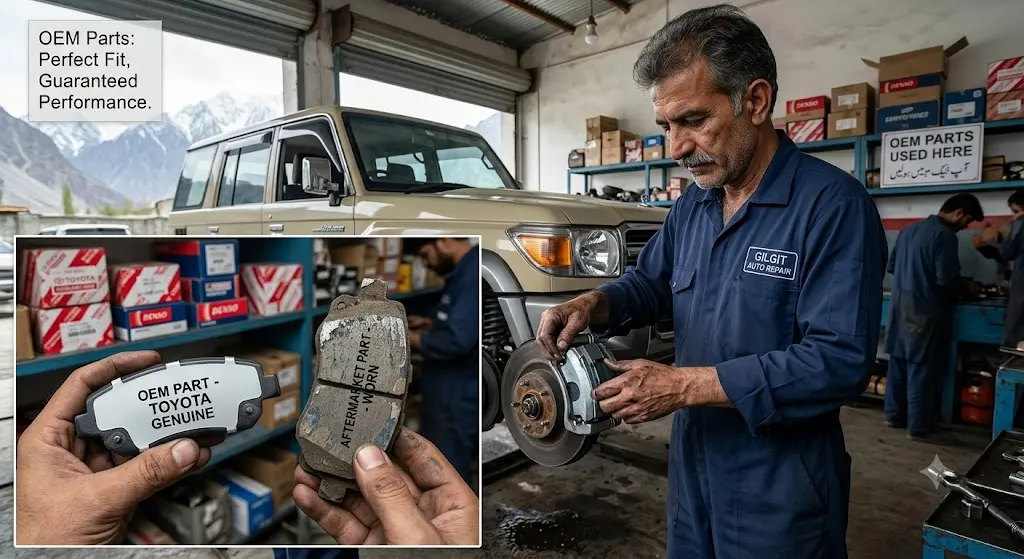
OEM parts have earned a strong reputation because they're designed to match the original specifications of the vehicle.
They offer consistent fit, performance, and compatibility, which can be especially valuable when replacing major components.
If you're considering an engine replacement instead of a new vehicle, it's also worth understanding how long a used engine lasts after replacement, as the quality of both the engine and the supporting parts can have a significant impact on long-term reliability.
That means they generally provide:
Reliable Fit
One of the biggest frustrations with poorly matched replacement parts is installation problems.
OEM parts are designed to fit the intended vehicle without unnecessary modification.
A proper fit usually means:
- Faster installation
- Less adjustment
- Better alignment
- Reduced risk of premature wear
Consistent Performance
Because OEM manufacturers work from the original engineering specifications, these parts are intended to perform like the components installed at the factory.
That consistency becomes especially important for:
- Suspension
- Steering
- Braking systems
- Engine components
- Cooling systems
Better Compatibility
Modern vehicles rely heavily on sensors and electronic systems.
Small differences in design can sometimes trigger warning lights or create unexpected issues.
OEM parts are generally designed to work with the vehicle's existing systems without introducing unnecessary compatibility concerns.
Are OEM Parts Always Better?
Not necessarily.
The best choice depends on the situation.
Many high-quality aftermarket manufacturers are producing excellent replacement components.
For routine maintenance items such as:
- Air filters
- Cabin filters
- Wiper blades
- Some brake pads
Aftermarket alternatives may perform perfectly well while offering cost savings.
The important factor isn't simply whether a part is OEM or aftermarket.
It's whether the replacement meets the required quality standards and is appropriate for your vehicle.
When OEM Parts Make the Most Sense
OEM parts are often worth considering when replacing components that directly affect safety, reliability, or complex vehicle systems.
Examples include:
- Engine sensors
- Fuel system components
- Transmission parts
- Electronic modules
- Steering components
- Suspension assemblies
These systems often rely on precise tolerances that reduce the margin for error. It's also helpful to understand how to read a car part number and what it means, as matching the correct part number helps ensure you're choosing a component that's compatible with your vehicle.
When Aftermarket Parts May Be Suitable
Aftermarket doesn't automatically mean lower quality.
Some manufacturers specialize in producing replacement parts that meet—or sometimes exceed the original design.
Drivers often choose aftermarket options when:
- The vehicle is older.
- OEM parts are difficult to source.
- Budget is an important consideration.
- Performance upgrades are desired.
The key is purchasing from reputable manufacturers rather than choosing solely based on the lowest price.
Common Mistakes People Make
Understanding the terminology helps avoid expensive mistakes.
Assuming OEM Means Genuine
Many buyers believe these terms are identical.
In reality, they describe related but different distribution channels.
Buying Based Only on Price
A cheaper component isn't necessarily poor quality.
Likewise, the most expensive option isn't automatically the best choice.
Looking at compatibility, manufacturer reputation, warranty, and intended use usually leads to a better decision.
Ignoring Part Numbers
Two parts may appear identical but have different specifications.
Always verify:
- Vehicle model
- Year
- Engine type
- VIN (where required)
- OEM part number
Even small differences can affect compatibility.
Assuming Every Aftermarket Brand Is the Same
The aftermarket industry includes both premium manufacturers and low-cost generic suppliers.
There's a significant difference between reputable engineering companies and unknown brands with little quality control.
Research matters.
Why Australian Drivers Should Pay Attention
Australia presents unique conditions for vehicles.
Cars regularly experience:
- Long-distance highway driving
- High temperatures
- Dusty rural roads
- Coastal salt exposure
- Heavy towing in some regions
These conditions place additional stress on many components.
Choosing quality replacement parts can contribute to better long-term reliability, especially for vehicles frequently used in demanding environments.
That's one reason many Australian mechanics recommend balancing cost with quality rather than automatically choosing the cheapest available option.
As more drivers compare prices and availability from home, it's easy to see why online auto parts marketplaces are the future, offering convenient access to a wider selection of quality replacement parts for different makes and models.
What Automotive Professionals Usually Consider
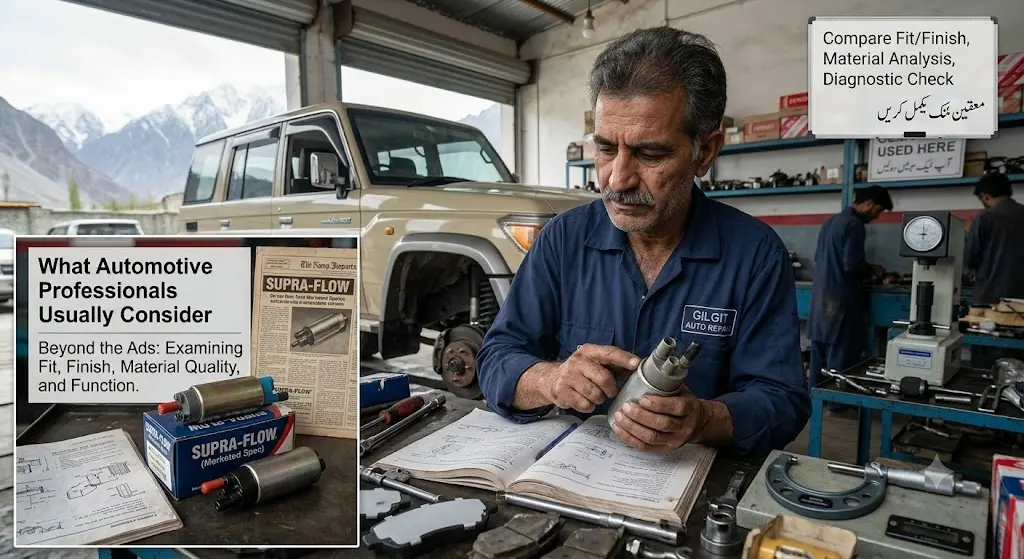
Experienced mechanics rarely choose parts based solely on marketing claims.
Instead, they typically evaluate:
- Proven manufacturer reputation
- Vehicle compatibility
- Availability
- Warranty support
- Long-term reliability
- Previous experience with the product
They also understand that different repair situations call for different solutions.
For example, replacing a sensor inside a modern engine management system may justify using an OEM component, while replacing floor mats obviously doesn't require the same level of precision.
Experience helps determine where OEM parts provide meaningful value and where quality aftermarket alternatives are perfectly reasonable.
How to Choose the Right Replacement Part
If you're unsure which type of part to buy, ask yourself a few practical questions:
- Is this a safety-critical component?
- Does the part interact with electronics or sensors?
- Is precise fit especially important?
- Is my vehicle still relatively new?
- Am I planning to keep the vehicle for many years?
If several of these answers are yes, OEM may be worth considering. If not, a reputable aftermarket replacement could be an equally sensible option. If you need a car part, taking a few minutes to compare quality, compatibility, and manufacturer specifications can help you make a more confident decision. The goal isn't to choose the most expensive part; it's to choose the most appropriate one.
Final Thoughts
Understanding what OEM means for car parts helps you make more informed decisions whenever your vehicle needs repairs or maintenance.
OEM refers to the original equipment manufacturer that produced components to the vehicle maker's specifications. While OEM and genuine parts are closely connected, they aren't always identical, and neither is automatically the right choice for every repair.
The best replacement depends on the vehicle, the specific component, your budget, and your long-term plans.
Taking a few extra minutes to understand the terminology and verifying compatibility before buying can save time, money, and unnecessary frustration later.
If you're unsure which replacement part suits your vehicle, consulting a knowledgeable supplier or experienced mechanic can help you make a confident decision.
FAQs
Are OEM better than aftermarket car parts?
Not always. OEM parts offer factory-specification fit and compatibility, while many high-quality aftermarket parts provide excellent performance at a lower price. The best choice depends on the specific component and your vehicle.
Are OEM parts the same as genuine parts?
They're closely related but not always identical. Genuine parts are sold under the vehicle manufacturer's brand, while OEM parts are produced by the original manufacturer and may be sold under that supplier's own brand.
Can OEM parts affect my vehicle warranty?
In Australia, using quality replacement parts doesn't automatically void a vehicle warranty. However, the part must be suitable for the vehicle and installed correctly. It's always wise to check your warranty terms.
Why are OEM parts usually more expensive?
OEM parts often involve stricter manufacturing standards, established supply chains, and brand-specific distribution, all of which can influence pricing.
How do I know if an OEM part fits my vehicle?
The safest approach is to verify your vehicle's VIN, model year, engine type, and OEM part number before purchasing. This helps ensure proper compatibility.