Volkswagen Golf Parts That Commonly Fail in Australia
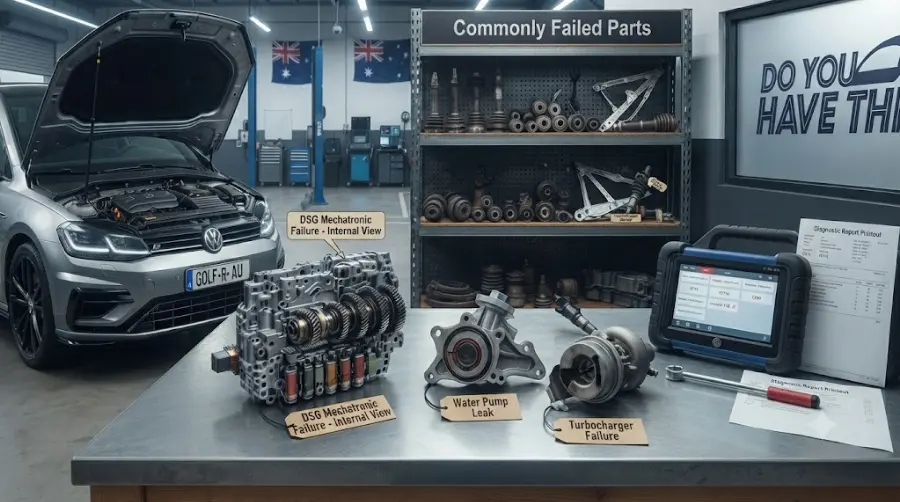
The Volkswagen Golf has earned a strong reputation for offering a comfortable drive, responsive handling, and practical everyday performance. It's one of the most popular hatchbacks in Australia, appealing to commuters, families, and driving enthusiasts alike.
However, like any vehicle, the Golf isn't immune to wear and tear. Many owners assume that because the car feels refined, it won't experience common mechanical problems until very high mileage. In reality, some components can wear earlier than expected, especially in Australia's varied climate and driving conditions.
Understanding VW Golf common failures Australia drivers frequently encounter can help you recognize warning signs, avoid unexpected breakdowns, and make informed maintenance decisions. Whether you own an older Mk5 or Mk6 or a newer Mk7 or Mk8, knowing which parts need attention similar to Mitsubishi Triton Common Issues and Parts That Need Replacing can help save both time and money.
Why Some Volkswagen Golf Parts Wear Faster in Australia
Australia presents unique challenges for vehicles. Long highway journeys, stop-and-go city traffic, coastal humidity, extreme summer temperatures, and dusty regional roads all place additional stress on mechanical and electrical components.
While Volkswagen designs the Golf for global markets, certain maintenance items naturally wear faster depending on driving habits and environmental conditions.
Factors that commonly accelerate component wear include:
- Frequent short trips where the engine never fully warms up
- Heavy urban traffic
- High ambient temperatures
- Irregular servicing
- Delaying replacement of worn parts
- Using incorrect fluids or lower-quality replacement components
Most Volkswagen Golf common issues develop gradually rather than appearing suddenly, making regular inspections especially valuable.
DSG Transmission Problems
One of the most discussed VW Golf problems involves the DSG (Direct Shift Gearbox), particularly in earlier models.
Although many owners enjoy the fast and smooth gear changes, the transmission contains sophisticated electronics and hydraulic components that require proper maintenance.
Common symptoms include:
- Jerky acceleration
- Delayed gear engagement
- Sudden warning lights
- Rough shifting
- Vehicle entering limp mode
The cause isn't always the gearbox itself. Sometimes the issue involves:
- Mechatronic unit faults
- Worn clutch packs
- Low-quality transmission fluid
- Missed service intervals
- Software-related issues
Vehicles that receive scheduled DSG servicing generally experience fewer long-term problems than those where maintenance has been neglected.
Water Pump and Thermostat Housing Failures
Cooling system issues are another commonly reported concern.
Many Volkswagen Golf owners eventually replace the water pump or thermostat housing because these components can develop leaks over time.
Signs of cooling system problems include:
Coolant loss is one of the Nissan Navara Common Problems Every Owner Should Know, especially as the vehicle ages.
Common warning signs include:
- Sweet smell after driving
- Engine temperature fluctuations
- Low coolant warning
- Visible coolant beneath the vehicle
Plastic thermostat housings can become brittle after years of heat cycles, particularly during Australian summers. Ignoring small coolant leaks may eventually lead to engine overheating, so early repairs can help prevent more expensive damage.
Carbon Build-Up in Direct Injection Engines
Many turbocharged Golf engines use direct fuel injection.
While this technology improves efficiency, it also allows carbon deposits to build up on intake valves because fuel no longer washes over them during normal operation.
Symptoms often include:
- Rough idle
- Reduced power
- Poor fuel economy
- Hesitation during acceleration
- Engine misfires
This issue develops slowly over many thousands of kilometers and isn't unique to Volkswagen.
Professional intake valve cleaning may eventually be required depending on driving style and mileage.
Timing Chain Tensioner Issues (Older Models)
Certain earlier Golf models experienced timing chain tensioner concerns.
Although not every vehicle is affected, owners of older vehicles often ask mechanics to inspect the timing system during servicing.
Potential warning signs include:
- Rattling noise during cold starts
- Engine timing faults
- Poor engine performance
- Check engine light
If ignored, a failing timing chain tensioner may allow the chain to skip timing, potentially causing serious internal engine damage.
Fortunately, later model improvements significantly reduced these concerns.
Ignition Coil and Spark Plug Failures
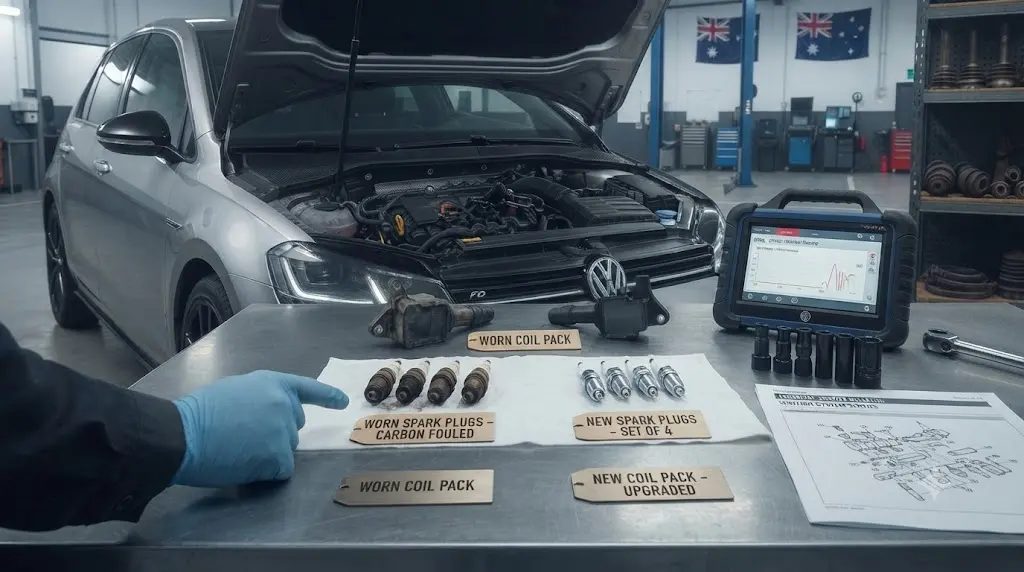
Among the more common VW Golf engine problems are worn ignition coils and spark plugs. These components naturally wear with age, while heat and heavy traffic can shorten their lifespan.
Typical symptoms include:
- Engine misfires
- Rough acceleration
- Poor fuel economy
- Flashing engine warning light
- Loss of power
Replacing ignition coils before complete failure can help prevent additional strain on the catalytic converter. Just as with other maintenance concerns, knowing Is It Safe to Drive With a Worn Brake Rotor? can help drivers recognize when a vehicle needs immediate attention.
Turbocharger Wear
Turbocharged engines deliver impressive performance, but the turbocharger operates under extreme temperatures.
Over time, normal wear can affect seals, bearings, or boost control components.
Drivers may notice:
- Reduced acceleration
- Whining noises
- Blue exhaust smoke
- Increased oil consumption
- Loss of boost pressure
Proper oil changes are one of the best ways to extend turbocharger life.
Using the correct oil specification is equally important.
Electrical Problems That Owners Frequently Report
Modern Golfs include numerous electronic control systems, making occasional electrical faults more noticeable than on older vehicles.
Common VW Golf electrical problems include:
- Faulty window switches
- Infotainment glitches
- Parking sensor errors
- Battery drain
- Dashboard warning lights
- Keyless entry faults
Many electrical issues result from aging batteries, poor connections, software updates, or failed sensors rather than major wiring failures.
A proper diagnostic scan is usually the fastest way to identify the actual cause instead of replacing parts unnecessarily.
Battery and Charging System Issues
Vehicles driven mainly on short trips often experience battery problems earlier than expected.
Modern Golfs continuously power numerous electronic modules even when parked.
Signs include:
- Slow engine cranking
- Warning lights
- Stop-start system not functioning
- Electrical accessories behaving unpredictably
Before replacing the battery, technicians usually inspect:
- Alternator output
- Battery condition
- Charging voltage
- Battery management system
Installing the correct battery type is especially important on newer Volkswagen models.
Suspension Component Wear
Australian roads range from smooth highways to rough regional routes.
Over time, suspension components naturally wear.
Common replacement items include:
- Control arm bushes
- Shock absorbers
- Strut mounts
- Sway bar links
- Wheel bearings
Symptoms often include:
- Knocking noises
- Uneven tire wear
- Poor handling
- Steering vibration
- Reduced ride comfort
Routine suspension inspections help identify worn components before they affect tire life or handling.
Brake Components
Brakes naturally wear on every vehicle, but driving style makes a significant difference.
Urban commuting typically results in faster brake wear than highway driving.
Watch for:
- Squealing brakes
- Grinding noises
- Steering vibration while braking
- Longer stopping distances
Brake pads, rotors, and brake fluid should all be inspected during regular servicing.
Ignoring early brake wear can increase repair costs later.
Oil Leaks Around Engine Components
As Golfs accumulate mileage, oil leaks become more common around:
- Valve cover gaskets
- Oil filter housing
- Camshaft seals
- Turbo oil lines
Small leaks may initially appear harmless. However, leaking oil can contaminate surrounding components and gradually lower engine oil levels. Regular inspections during servicing can help detect these issues early. Similarly, knowing Is It Safe to Use a Second Hand Airbag in Australia? can help drivers make safer decisions when dealing with other vehicle repairs and replacement parts.
Common Volkswagen Golf Maintenance Problems Owners Can Prevent
Many reported Volkswagen Golf maintenance problems aren't caused by manufacturing defects.
Instead, they're linked to delayed servicing or overlooked maintenance.
Examples include:
- Skipping oil changes
- Ignoring coolant leaks
- Delaying brake replacement
- Missing DSG service intervals
- Using incorrect engine oil
- Ignoring warning lights
Following Volkswagen's recommended maintenance schedule remains one of the most effective ways to reduce long-term repair costs.
Common Mistakes Owners Make
Many expensive repairs begin with small issues that receive little attention.
Some of the most common mistakes include:
Waiting Until Warning Lights Become Serious
Dashboard warnings often appear early enough to prevent larger failures.
Ignoring them usually increases repair costs.
Choosing the Cheapest Replacement Parts
Low-quality aftermarket components sometimes fail sooner than expected.
Using quality replacement parts generally provides better long-term reliability.
Delaying Fluid Changes
Engine oil, coolant, transmission fluid, and brake fluid all have recommended replacement intervals.
Old fluids lose their protective properties over time.
Assuming Every Noise Is Normal
Small rattles, vibrations, or unusual sounds often indicate developing mechanical issues.
Early diagnosis usually results in simpler repairs.
Expert Perspective: Why Accurate Diagnosis Matters
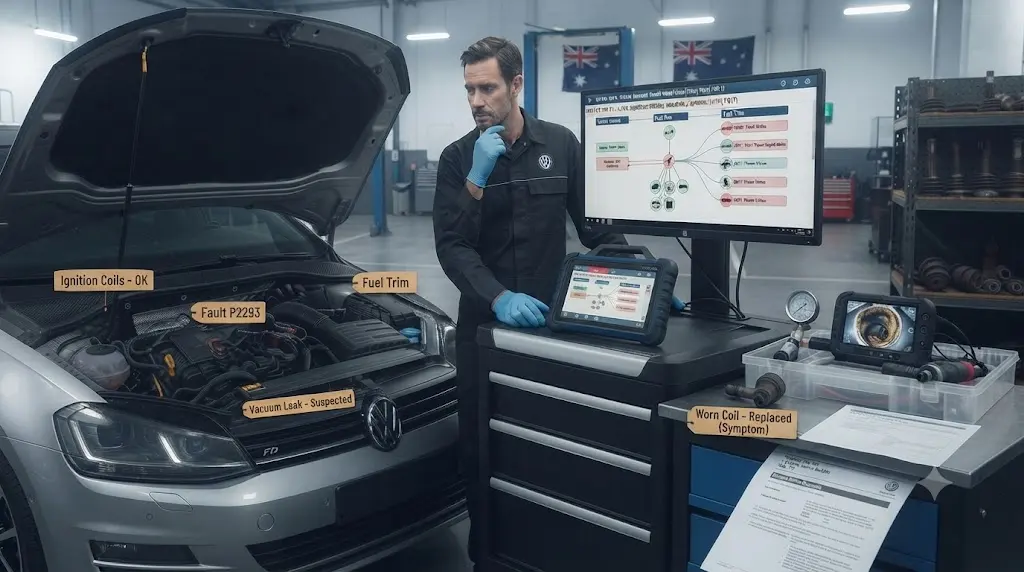
Modern Volkswagens rely on integrated electronic systems that communicate with each other, so a single warning light can have multiple possible causes.
For example, rough running may result from:
- Faulty ignition coils
- Carbon build-up
- Fuel system issues
- Sensor faults
- Vacuum leaks
Replacing parts based only on symptoms can be expensive without fixing the real problem. Experienced technicians use diagnostic scans alongside physical inspections to identify the actual fault, reducing unnecessary parts replacement and improving repair accuracy. Understanding Car Parts Wear Out Fastest on Australian Roads can also help drivers identify components that may require closer inspection during routine maintenance.
How to Keep Your Volkswagen Golf Reliable
Although discussions about VW Golf problems can sound concerning, it's worth remembering that many Golfs provide years of dependable service when maintained properly.
Good habits include:
- Following scheduled servicing
- Using manufacturer-approved fluids
- Addressing coolant leaks quickly
- Replacing worn ignition components
- Inspecting suspension regularly
- Monitoring battery health
- Paying attention to unusual sounds or warning lights
Preventive maintenance almost always costs less than repairing major failures after they've developed.
Conclusion
The Volkswagen Golf remains one of Australia's most enjoyable and practical hatchbacks, but every vehicle develops wear as it ages. Understanding the most common VW Golf failures Australia owners report, from DSG transmission concerns and cooling system leaks to ignition issues, suspension wear, and electrical faults, helps you recognize problems before they become expensive repairs.
Regular servicing, quality replacement parts, and prompt attention to warning signs go a long way toward keeping a Golf reliable for years to come. If you're unsure about an unusual noise, warning light, or performance change, seeking professional advice early is usually the smartest next step.
FAQs
How reliable is the Volkswagen Golf in Australia?
The Volkswagen Golf is generally considered reliable when maintained according to the manufacturer's service schedule. Many common issues become more manageable when identified early.
Which Volkswagen Golf model has the fewest problems?
Later-generation Golf models often include improvements over earlier versions, although maintenance history usually has a greater impact on reliability than model year alone.
Are DSG transmission problems common?
Some earlier DSG-equipped models experienced more transmission-related issues than others. Regular DSG servicing helps reduce the risk of long-term problems.
What are the most common VW Golf engine problems?
Owners commonly report ignition coil failures, coolant leaks, carbon build-up in direct injection engines, turbocharger wear, and occasional timing-related concerns on certain older models.
How can I reduce the chance of expensive Volkswagen Golf repairs?
Follow the recommended maintenance schedule, use quality replacement parts and approved fluids, respond to warning lights promptly, and have unusual noises or performance changes inspected before they worsen.