DIY Car Repairs Every Aussie Owner Should Learn (and What Parts You'll Need)
Most car trouble starts small. A headlight globe blows on the drive home. The battery won't turn over on a frosty Canberra morning. Someone rolls a trolley into your tail light at the shops. None of these needs a week at the workshop. With a few tools and the right part, they're DIY car repairs Australian owners can handle in their own driveway, and you can track down that part by posting a request on the DoYouHaveThis car parts marketplace.
Below you'll find the beginner jobs worth learning first, a car maintenance checklist that takes about ten minutes, and a DIY car parts list to have ready. We'll also be upfront about the jobs that belong with a licensed mechanic.
Why Do It Yourself Car Maintenance Is Worth Learning
On small jobs, labour can easily cost more than the part. Fitting new wiper blades or a headlight globe takes minutes at home, but at a workshop you're paying for the booking and the time as well.
Australian conditions also add wear. Strong UV hardens rubber and fades plastic, summer heat is hard on batteries, outback dust clogs air filters, and salt air near the coast speeds up corrosion. Owners who check their own cars tend to spot these problems early.
There's a confidence benefit too. Basic auto maintenance DIY jobs teach you what normal looks, sounds and feels like for your car. When something changes, you'll notice, and if you do need a workshop you'll know what to ask for.
One thing to check before you start: your warranty. The ACCC says a new car doesn't have to be serviced at the dealer to keep its warranty. However, the work must be done by qualified staff, to the manufacturer's specifications, using suitable parts. So while your car is under warranty, have the logbook services done by a qualified mechanic. Keep receipts for any parts you fit yourself.
Car Maintenance Checklist for the Home Mechanic
Most faults give some warning before they leave you stuck on the side of the road. A quick look once a month picks up a lot of them. Here's a car service checklist you can run on a Saturday morning:
- Engine oil. Park on level ground, let the engine cool and check the dipstick. Low or very dark oil means it's time for a top-up or a change.
- Coolant: check the overflow tank, and only with the engine cold. Never open a hot radiator cap.
- Tyres. Set pressures to the placard (usually on the driver's door jamb) and look for cuts, bulges and uneven wear. The legal minimum tread depth in Australia is 1.5 mm. That's when the tread wear indicators sit level with the tread.
- Try the 20-cent coin test. Push the coin into a groove: if the platypus's bill is hidden, you've got more than 3 mm of tread left.
- Get someone to work the brake pedal, indicators and reverse gear while you walk around the car and check every light.
- Wipers and washer fluid. Streaking or chattering usually means the rubber has gone hard in the sun.
- White or green crust on the battery terminals needs cleaning off, and slow cranking on cold mornings is a sign to get the battery tested.
- Brake fluid. Check the reservoir level and notice how the pedal feels.
A few car maintenance tips help the habit stick. Pick the same weekend each month. Jot down what you find in your phone, and photograph anything that looks off so you can compare next time. Most good automobile maintenance comes down to catching small changes early.
5 Easy DIY Car Repairs to Learn First
You'll need basic tools, some patience and your owner's manual. Search for a guide to your exact make and model before you start, because access can differ a lot from car to car.
How to Change a Car Battery at Home
Match the new battery to the old one on size, terminal layout and cold cranking amps (CCA). Cars with stop-start usually need an AGM or EFB battery, and some European models need the new battery registered with a scan tool.
Undo the negative terminal first, then the positive, then the hold-down clamp. Fit the new battery and connect the positive first and the negative last. Make sure everything is tight. Most battery retailers will take your old battery for recycling.
How to Replace a Headlight Globe
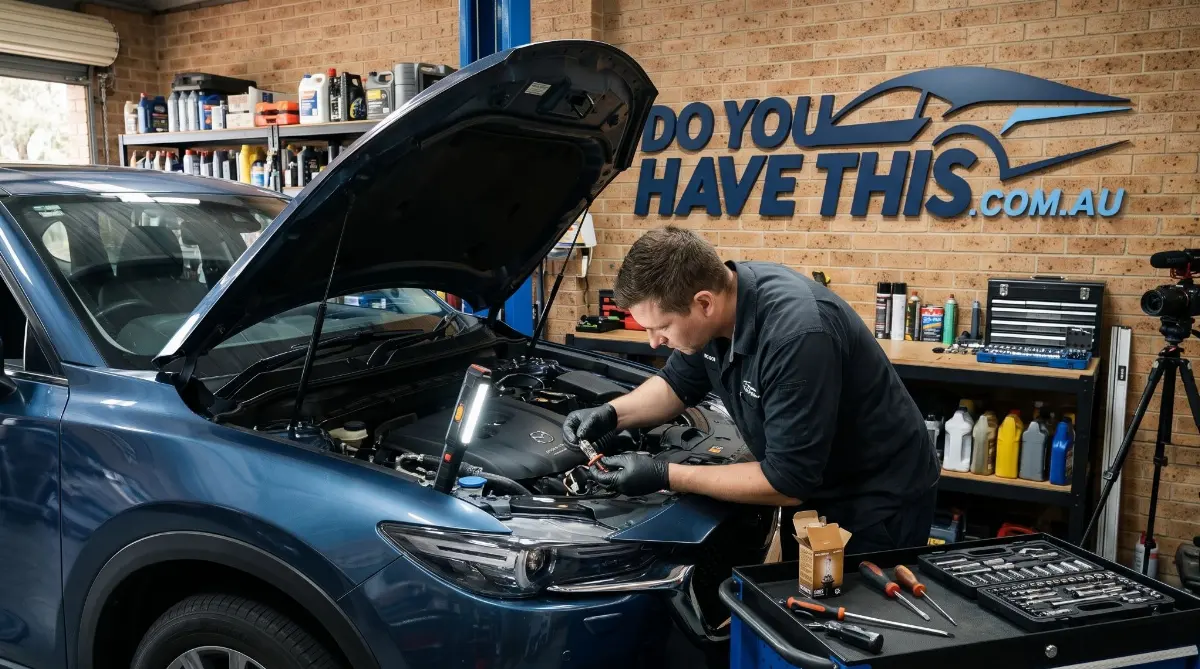
Your owner's manual will list the globe type, such as H4 or H7. Avoid touching the glass of a halogen globe with bare fingers, because oil from your skin can shorten its life. Replace globes in pairs so both beams match. On some cars this takes two minutes. On others, the wheel arch liner or even the bumper has to come off, so check first.
Wiper Blades and Air Filters
These are the easiest jobs on most cars. Wiper blades usually clip on and off the arm. The engine air filter sits in a plastic housing held by clips or a few screws. If you often drive on dirt roads, check it more often than the service schedule says.
DIY Oil and Filter Change
Get the correct oil grade from your manual, a new filter, a new sump plug washer, a drain pan and two jack stands. Never work under a car held up only by a jack. Drain the oil while it's warm but not hot, fit the new filter, and tighten the sump plug to the specified torque.
Used oil must never go down the drain. Planet Ark's Recycling Near You site lists drop-off points around Australia. Many council transfer stations and waste centres accept used motor oil, and some petrol stations do too. Don't filter it or add anything to it first.
How to Replace a Side Mirror or Tail Light Assembly
These bolt-on parts are perfect for buying second-hand. A tail light is often held by two or three nuts inside the boot, plus a wiring plug. A side mirror usually means removing the door trim, undoing a few bolts and unplugging the wiring.
Look at the live part requests on DoYouHaveThis and you'll see tail lights, headlights and door handles come up again and again. A used mirror already in your car's colour can save you a paint bill. Just match the exact model, year and features, like heating, a built-in indicator or power folding.
Replacing Brake Pads and Knowing Your Limits
Replacing Brake Pads Yourself
Many experienced home mechanics do their own brake pads, but it's a clear step up from the jobs above. Brakes are safety-critical, and a mistake can cost more than money.
The warning signs are a high-pitched squeal from the wear indicator, grinding, a pulsing pedal or longer stopping distances. If you take the job on, follow a workshop manual for your exact model and use a torque wrench on the caliper bolts and wheel nuts. Bed in the new pads the way the maker recommends. Many newer cars have an electronic park brake, and their rear calipers need a scan tool to wind back.
Always buy brake pads new, not second-hand. If anything feels wrong afterwards, get the brakes checked before you drive normally again.
Jobs to Leave to a Licensed Mechanic
Some jobs aren't worth the risk at home:
- Airbags and anything else in the SRS system
- Timing belts, where being one tooth out can wreck an engine (our guide to how timing belts work and when they need replacing explains why)
- Automatic transmission internals, steering and fuel system work
- Anything near the orange high-voltage cables on a hybrid or EV
If your car can't be driven, an on-site mechanic can come to you. Remember too that anything affecting roadworthiness will need to pass inspection when you sell or re-register the car, such as a safety certificate in Queensland or a roadworthy certificate in Victoria.
Your DIY Car Parts List: Tools and Spares to Keep on Hand
A starter kit doesn't have to be expensive. Begin with a metric socket set, a torque wrench, a trolley jack, two jack stands, wheel chocks, plastic trim tools, a basic multimeter, a drain pan, gloves and a good torch.
For spares, keep a set of wiper blades, a spare headlight globe, a few fuses, and the oil, filter and washer for your next service.
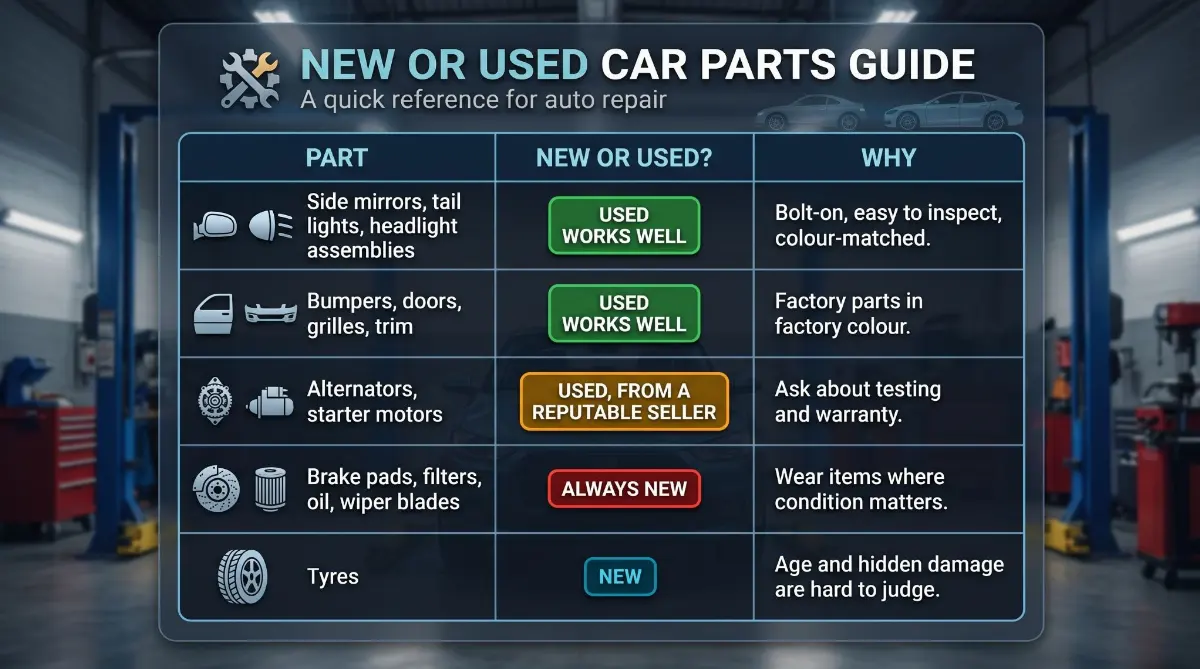
Some parts make sense to buy used and some don't. Here's a simple guide:
Where to Buy Used Car Parts for DIY Repairs
On an older car, a new dealer part can cost more than the car is worth to you. Wreckers and dismantlers are where many DIY owners find better value, with genuine factory parts pulled from the same model.
The problem is finding the right part without calling every yard in town. On DoYouHaveThis, you post a request with photos and details, wreckers and sellers who have the part reply, and you deal with them directly. DoYouHaveThis runs the marketplace and doesn't sell parts itself. Buyers in Sydney and across NSW can hear from local yards and from sellers interstate.
To get the right part the first time:
- Include your VIN, make, model and year in the request.
- Photograph the old part, including any part numbers, plugs and mounting points.
- Mention options such as trim level, engine size or a mirror with a built-in indicator.
- Ask the seller to confirm compatibility and the part number before you pay, and check their returns policy.
Driving a ute? Our guide to Mitsubishi Triton common issues and the parts that wear first is a good example of what to keep an eye on in a hard-working vehicle.
Ready to Tackle Your First DIY Repair?
Start with one job this weekend. A battery, a headlight globe or a set of wipers is enough to build your confidence, and every job makes the next one easier.
When you know what you need, request the part on DoYouHaveThis and let wreckers come to you. If you have a question about posting a request, get in touch with the DoYouHaveThis team.
Frequently Asked Questions
What car repairs can I do myself at home?
The easiest DIY car repairs for Australian owners are changing a battery, replacing headlight globes, fitting new wiper blades and swapping the engine air filter. With a few more tools, an oil and filter change or a bolt-on side mirror or tail light is very doable. Start small and always check your owner's manual for your exact model.
Can I replace brake pads myself?
Many experienced home mechanics do, but brakes are safety-critical, so only take it on if you're confident. You'll need a workshop manual, a torque wrench, and on many newer cars a scan tool for the electronic park brake. Always buy new pads, and have the car checked if anything feels wrong afterwards.
What should be on a car maintenance checklist?
A basic car maintenance checklist covers engine oil, coolant, tyre pressures and tread, all lights, wipers and washer fluid, battery terminals and brake fluid. Running through it once a month takes about ten minutes. Writing down what you find makes it easier to spot changes early.
Is it cheaper to buy used car parts for DIY repairs?
For bolt-on parts like mirrors, tail lights, headlight assemblies and body panels, used parts from wreckers are usually much cheaper than new dealer parts. A colour-matched used part can also save you a paint job. Wear items such as brake pads, filters and tyres should always be bought new.
How do I find the right used part for my car in Australia?
Have your VIN, a photo of the old part and any part numbers ready, then post a request on DoYouHaveThis so wreckers and sellers who have the part can respond. Ask sellers to confirm compatibility and the part number before you buy. If you need help with your request, contact the DoYouHaveThis team.