When to Repair or Write Off a Car in Australia: A Cost Analysis Guide
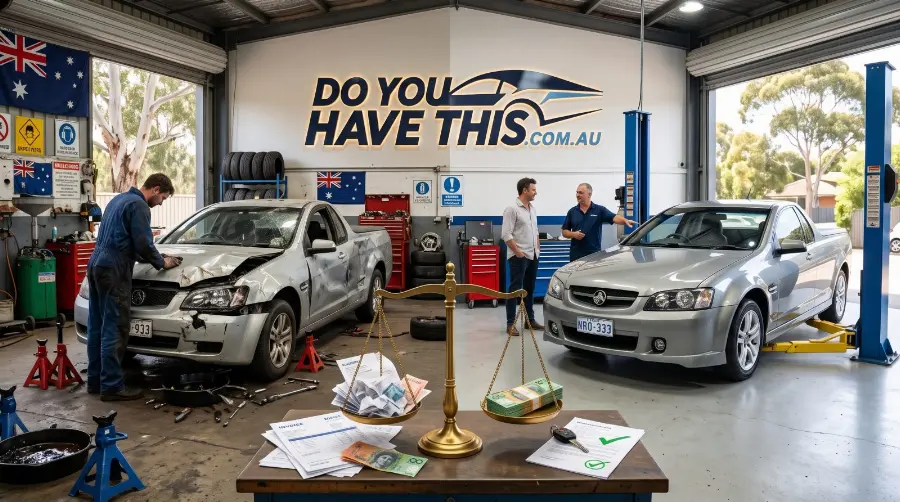
The quote comes back from the panel shop or the mechanic, and it's bigger than you hoped. Now you're stuck with a question every driver faces eventually: do you repair or write off the car? In Australia the answer comes down to a few numbers, a couple of legal definitions and some honest thinking about what the car is worth to you. And sometimes a single used part from a wrecker changes the maths completely, which is why it pays to check what's available on the DoYouHaveThis car parts marketplace before you decide.
This guide walks through how to compare the repair quote with the car's value, how insurers make the call, what statutory and repairable write-offs actually mean, and what to do with a car that isn't worth saving.
Is My Car Worth Fixing? Start With Two Numbers
Every repair-or-scrap decision starts with two figures: what the car is worth today, and what it will cost to fix.
Market value. This is what a buyer would realistically pay for your car, in its condition before the damage. Price guides such as Redbook give a starting point. Then compare similar cars for sale near you with the same model, year, kilometres and condition. Be honest here. An older, high-kilometre car is rarely worth what its owner hopes.
The repair quote. Get it in writing and ask for it itemised, with parts and labour listed separately. That split matters later, because parts are often where the savings are. If the damage is serious, get a second quote. Hidden damage often turns up once panels come off, so ask the repairer how confident they are in the figure.
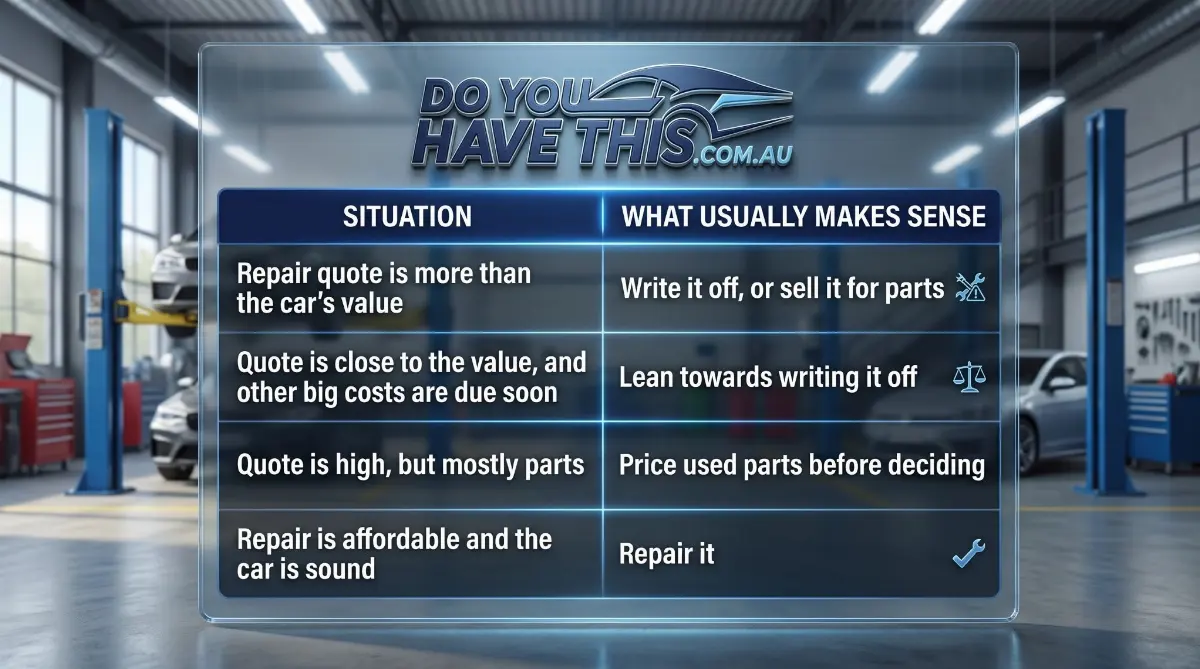
With both numbers in hand, the first question is simple. Does the repair cost more than the car is worth? If it does, fixing it rarely makes financial sense. If it's close, the details below will decide it.
The Repair Cost Threshold: How Insurers Make the Call
If you're claiming on comprehensive insurance, the decision usually isn't yours. The insurer assesses the car and decides whether to repair it or declare it a total loss.
How Do Insurers Decide to Write Off a Car?
Most insurers use a version of the same test: the cost of repairs plus the car's salvage value, compared with its market or agreed value. If repairs plus salvage come to more than the value, the car is uneconomical to repair and gets written off. The Australian Financial Complaints Authority (AFCA) looks at disputes the same way. It also checks that the car would be safe once repaired.
There's no single repair cost threshold, such as a set percentage, that every insurer uses. Each policy's wording decides it, so read the total loss definition in your Product Disclosure Statement (PDS).
Market Value vs Agreed Value
Your type of cover changes the payout. With market value cover, the insurer works out what the car was worth just before the incident. With agreed value cover, you and the insurer settle on a figure when the policy starts or renews.
Either way, expect deductions from the payout. NRMA, for example, takes off your excess, any unpaid premium and on-road costs such as unused rego and CTP, although it doesn't deduct on-road costs for Queensland-registered cars. Check your own policy, because each insurer sets its own terms. Once the claim is settled as a total loss, the insurer usually keeps the damaged car.
Statutory vs Repairable Write Off: What Each Means
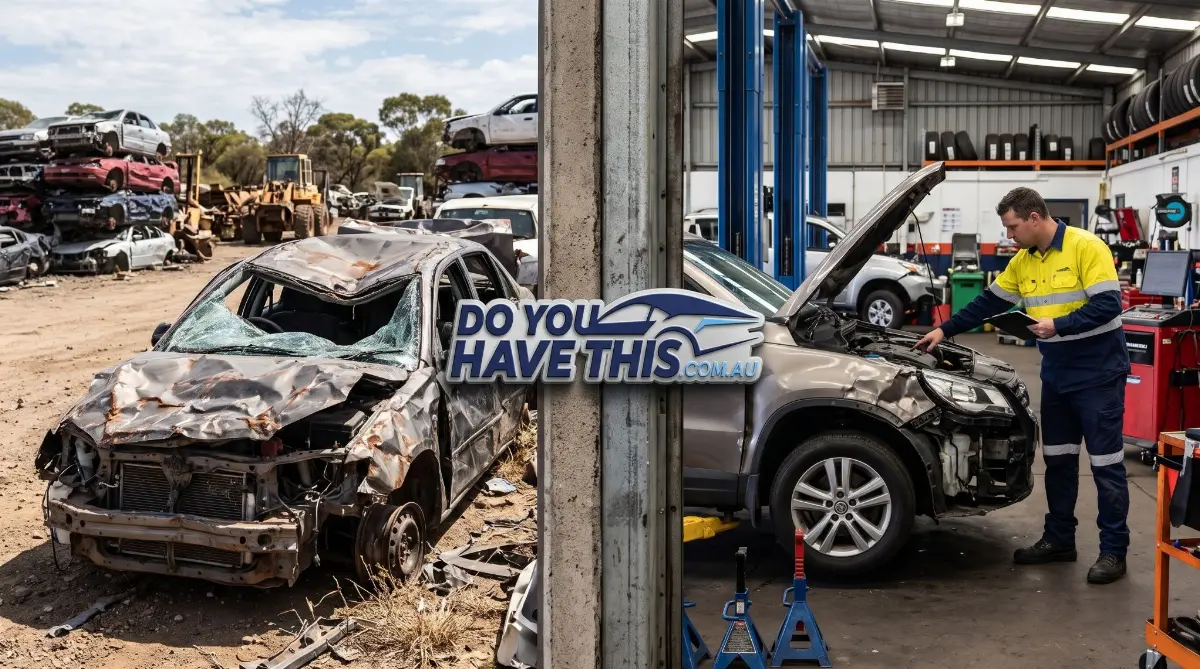
Every write-off in Australia falls into one of two categories, and they lead to very different outcomes.
Statutory Write Off
A statutory write off is a car so badly damaged that it can't be safely repaired. It can never be registered again anywhere in Australia, and it's only fit for parts or scrap. Severe structural damage from a high-speed crash or a vehicle fire can put a car in this category, depending on each state's assessment criteria.
Repairable Write Off
A repairable write off is a car assessed as a total loss that doesn't meet the statutory criteria. Usually that's because repairing it costs more than it's worth, not because it's unsafe to fix. It can go back on the road, but only after extra checks:
- In Queensland, it needs both a safety certificate and a written-off vehicle inspection, which confirms the car's identity.
- NSW is stricter. Transport for NSW only considers repairing and re-registering a written-off light vehicle in limited circumstances, and you need an Authorisation to Repair before any work starts.
- In Victoria, you need a certificate of roadworthiness and a Victorian vehicle identity validation certificate.
- Other states and territories have their own inspection steps, so check with your registration authority.
Both types are recorded on the national Written-Off Vehicle Register (WOVR). It generally covers vehicles up to 15 years old and under 4.5 tonnes. The decision is usually made by your insurer, but in Queensland a dismantler, auctioneer or the owner can also notify a write-off. NSW also treats light vehicles written off only because of hail damage differently when the owner keeps them, so ask your insurer about this if hail is the problem.
Not Insured? How to Run the Numbers Yourself
Without comprehensive cover, you make the decision yourself, and there's no rule saying where your line has to sit. It helps to set your own limit before you get quotes, for example a share of the car's value you won't go past on a single repair. The right number depends on more than the quote, though.
Ask yourself these questions:
- What else is due soon? Tyres, a timing belt, rego or a major service on top of the repair can tip the balance.
- How's the rest of the car? Rust, oil leaks and a tired gearbox don't show up on a crash repair quote.
- What would a replacement cost? Check prices for a similar car. A repair on a car you know and trust can still be cheaper than buying someone else's problems.
- Is it safe? No saving is worth it if the car won't be roadworthy afterwards.
Then redo the sum with real prices. Take the labour figure from your itemised quote, add the price of each part from a wrecker instead of new, and compare that total with the car's market value. A quote that looked like a write-off can come in well under the car's value once the parts line changes.
How Used Parts Can Change the Repair Decision
Parts are often the biggest line on a quote, and they're the easiest part of the decision to change. Wreckers and dismantlers hold genuine factory parts pulled from the same models. For body panels, lights, mirrors, doors and even engines or gearboxes, a used part can cost far less than new.
On DoYouHaveThis, you post what you need with photos and details, wreckers and sellers who have the part reply, and you deal with them directly. Include your VIN, make, model and year, and ask the seller to confirm the part fits and its part number before you pay. Then take the prices back to your repairer and ask for a revised quote. Check first that your repairer is happy to fit parts you supply.
Mechanical failures follow the same logic. A snapped timing belt can badly damage an engine, as our guide to how timing belts work and when they need replacing explains. A good used engine is sometimes cheaper than rebuilding the old one.
Not Worth Fixing? Sell Your Car for Parts
If the numbers say no and the insurer isn't taking the car, it still has value. A car that's uneconomical to repair often has a sound engine, gearbox, seats, wheels or panels that other owners need.
A few steps help you get a fair result:
- Take clear photos of the whole car, the damage and the parts that still work well, like the engine bay, interior and wheels.
- Write down the VIN, kilometres and any recent work, such as a new clutch or tyres, because buyers value parts with a known history.
- Be upfront about what's damaged. It saves time and builds trust with wreckers.
- Get more than one offer if you can, then compare what each buyer is actually offering, including who arranges collection.
You can list it on DoYouHaveThis so wreckers can see it and get in touch. Owners in Melbourne and across Victoria can reach local wreckers as well as buyers interstate. Before you sell, check your state's rules. If you declare an uninsured car a write-off yourself, you may need to notify your registration authority, and WA, for example, requires you to hand in the plates.
Making the Call With Confidence
The decision gets easier once the numbers are in front of you. Get the car's real market value, an itemised quote and used-part prices, then check whether it's a statutory or repairable write off if your insurer is involved.
When you're ready to price parts or list the car, post a request on DoYouHaveThis and let wreckers come to you. If you've got a question about how the marketplace works, get in touch with the DoYouHaveThis team.
Frequently Asked Questions
Is my car worth fixing or should I write it off?
Compare the itemised repair quote with your car's current market value. If the repair costs more than the car is worth, writing it off usually makes more sense. If it's close, price used parts, factor in other upcoming costs, and think about what a replacement would cost.
Can a statutory write off be re-registered?
No. A statutory write off can never be registered again anywhere in Australia, and it can only be used for parts or scrap. A repairable write off can usually be re-registered once it's repaired and passes your state's inspections, although NSW only allows this in limited circumstances.
Can I keep my car if it's written off?
If your insurer settles the claim as a total loss, it usually keeps the car. Ask your insurer how it handles the car before you accept the settlement. Remember that a repairable write off still has to pass inspection before it can go back on the road.
What's the repair cost threshold for writing off a car?
There's no single percentage that every insurer uses. Insurers generally write a car off when the repair cost plus salvage value is more than the car's market or agreed value. Check the total loss definition in your policy's PDS for the exact wording.
How do I sell a car that isn't worth fixing?
You can list it on DoYouHaveThis so wreckers who want its parts can contact you directly, or post requests if you'd rather repair with used parts. Check your state's write-off rules before you sell. For questions about listing, contact the DoYouHaveThis team.