How to Match Interchangeable Parts Across Different Car Models
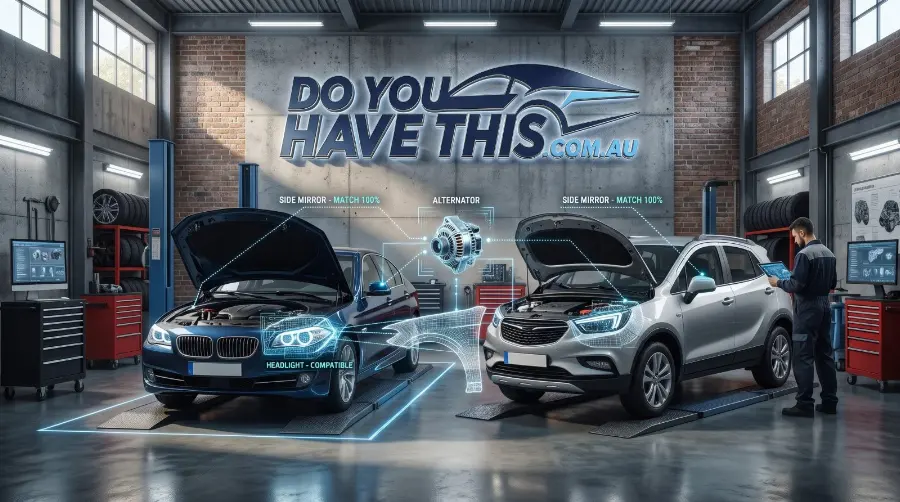
A wrecker pulls a taillight off a Mazda BT-50, and it bolts straight onto a customer's Ford Ranger. No drilling, no adapters, no fuss. That isn't luck. It's badge engineering, and it's the reason a seller on DoYouHaveThis, Australia's used car parts marketplace, might respond to your Ranger request with a part pulled from a Mazda.
Experienced wreckers carry this knowledge in their heads. They know which utes and coupes share a platform, which generations actually match, and where the overlap stops. This guide covers three pairings Aussie buyers ask about all the time: Ford Ranger and Mazda BT-50, Holden Colorado and Isuzu D-Max, and Toyota 86 and Subaru BRZ.
What Badge Engineering Means for Interchangeable Car Parts
Badge engineering happens when two car makers share one vehicle. One company usually does most of the engineering, and each brand puts its own styling and logo on the result.
What gets shared tends to follow a pattern. The chassis, engine, gearbox, axles, wiring, and much of the interior trim are usually shared. The face of the car usually isn't. Grilles, bumpers, headlights, bonnets, and front guards are where each brand makes its version look different.
Why shared platform parts matter when you buy used
The practical win is a bigger pool of donor cars. If you need a gearbox for a 2014 Ranger, every wrecked BT-50 from the same era can be a source too. Australian motoring press has long pointed out that many BT-50 service parts are interchangeable with the Ranger's.
The catch is that "same platform" doesn't mean every part fits every year. Most mismatches come from assuming a twin is a twin for its whole life. In practice, the relationship changes between generations.
Ford Ranger and Mazda BT-50: Shared Parts by Generation
The Ranger and BT-50 have been linked for decades, but the details depend on which generation you own.
2006 to 2011: Ranger PJ/PK and BT-50 UN
In this era, Mazda did most of the engineering, and Ford sold its own badged version. Parts sellers commonly list cab chassis tail lamps, manual door mirrors, A/C condensers, and outer door handles as fitting both models. Mechanical parts swap well. Front-end styling is where you need to check.
2011 to 2020: Ranger PX and BT-50 UP/UR
This is the pairing most wreckers mean when they say same ute. The PX Ranger and the UP/UR BT-50 were co-developed, with Ford Australia leading the design work. They share the 3.2-litre five-cylinder and 2.2-litre four-cylinder diesels, the gearboxes, the chassis and much of the cabin.
The two drifted apart over time. The BT-50 kept its own nose: bonnet, grille, headlights and guards are all Mazda-specific. Ford also gave the Ranger later updates that Mazda never adopted, including changes to how traction control works with the rear diff lock engaged, and the 2.0-litre bi-turbo diesel offered in the Ranger from 2018. A part from a late-model PX Ranger won't automatically suit a BT-50 built in the same year.
2020 onwards: the BT-50 changes partners
This one catches people out. The current BT-50 isn't related to the Ranger at all. Mazda moved to Isuzu, and the new BT-50 shares its platform with the third-generation D-Max.
So if you own a 2021 BT-50, your donor cars are D-Maxes, not Rangers. Mazda gave it unique body panels, so styling parts still differ, but much of what sits underneath is shared.
Holden Colorado and Isuzu D-Max: Same Chassis, Different Engines
The Colorado and D-Max story is similar. These utes started almost identical and then separated where it counts most for parts buyers: under the bonnet.
2003 to 2012: Rodeo RA and Colorado RC
Between 2003 and 2008, the D-Max was sold here as the Holden Rodeo. In 2008, it became the Holden Colorado, and Isuzu began selling the D-Max under its own name at the same time. The RC Colorado and the early D-Max are close to identical, and both used Isuzu's 3.0-litre 4JJ1 turbo-diesel. Interchangeability between these two is about as good as it gets.
2012 to 2020: Colorado RG and D-Max
The RG Colorado and the second-generation D-Max share an underlying platform, but GM and Isuzu took them in separate directions. The Colorado used a 2.8-litre Duramax diesel, while the D-Max kept Isuzu's own 3.0-litre engine. Engine parts, injection, engine management, and most front body panels don't cross over.
Some running gear does. Owners comparing the two have reported that the rear axle and brakes appear identical, while load ratings and transfer case gearing differ. Treat anything underneath as "probably shared; confirm the number".
Toyota 86 and Subaru BRZ: Interchangeable Parts for Twin Sports Cars
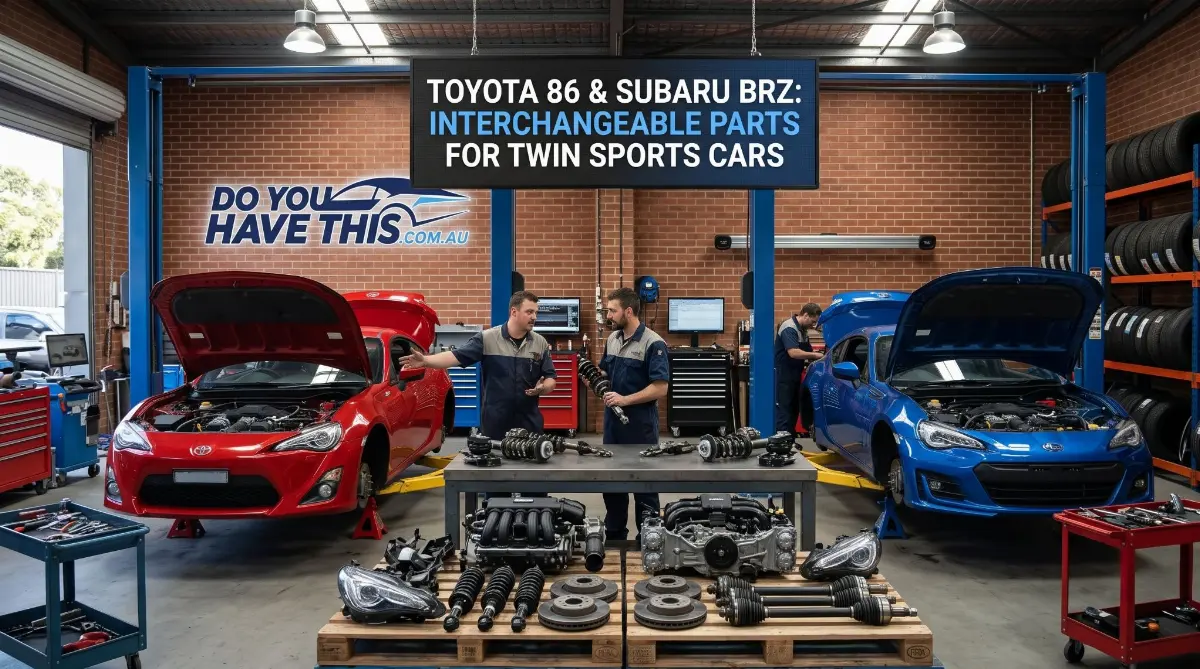
The 86 and BRZ are the purest example of the three. Toyota and Subaru developed the car together, and Subaru builds both.
First generation: 2012 to around 2021
Both cars use the same 2.0-litre flat-four boxer engine. Subaru calls it the FA20, and Toyota calls it the 4U-GSE. The chassis, gearbox, brakes, and most of the interior are shared. The visible differences are mostly at the front: bumper, grille, and lighting details, plus the badges.
The one thing that trips buyers up is suspension tuning. The two brands share the suspension design but specify different spring rates and damper settings. A BRZ strut will physically fit an 86, but it can change the car's handling. Replace suspension parts in matched pairs, and don't mix one of each across an axle.
Second generation: GR86 and BRZ from around 2022
The newer twins moved to a 2.4-litre engine. They're still closely related to each other, but don't assume first-generation engine and driveline parts will fit them.
Parts That Rarely Swap Between Twins
Even between close twins, a few part groups are usually brand-specific:
- Front styling: grilles, bumpers, headlights, bonnets and guards
- Badges, steering wheel trim and some interior finishes
- Infotainment units and screens, which often change between brands and model updates
- Engine computers and immobiliser parts, which can be coded to the original vehicle and may need reprogramming
Body panels behind the front doors, glass, mechanical parts, and many cabin parts are where twins pay off.
How to Cross-Reference a Part Number Before You Buy
A good part cross-reference beats a guess every time. Here's the process wreckers use:
- Start with your VIN and build date. Model years can be misleading because updates often land mid-year. The build date tells a seller exactly which version you have.
- Read the number off your old part. OEM part numbers are the strongest evidence of a match. Photograph the label or stamping if you can.
- Match the details that change between versions: engine code, 4x2 or 4x4, cab chassis or tub, and trim level. Base and high-spec models can use different headlights, mirrors, and wiring.
- Ask the seller to confirm the part number on the donor part.
- Check plugs and sensors on anything electrical. Connector shapes sometimes change within a generation even when the part looks identical.
- For brakes, steering, and suspension, get a mechanic to inspect the part before it goes on.
Fit is one question and wear is another. Our guide to Mitsubishi Triton common issues and parts that need replacing shows which ute parts tend to wear out first, which helps you judge any donor part.
Getting Shared Platform Parts From Australian Wreckers
Here's the trick experienced buyers use: name both badges in a part request. "Gearbox for 2015 Ranger PX 3.2 / BT-50 UP 3.2" reaches sellers wrecking either car, so you'll usually get more replies than you would by listing one badge.
When you post a part request, include your VIN, build date, and the part number from your old part. Independent wreckers and sellers respond directly, and DoYouHaveThis connects you with them. Requests reach sellers across the country, including car wreckers in Perth and every other major city.
Find the Right Interchangeable Part for Your Car
Badge engineering gives you more donor cars, but only when you match the generation and the part number. Know which twin your car belongs to, check the numbers, and name both badges in your request.
Not sure whether a part from a different badge will fit? Contact the DoYouHaveThis team or post a request with your VIN, and let sellers across Australia tell you what they have.
Frequently Asked Questions
Is the Mazda BT-50 the same as a Ford Ranger?
Only for 2006–2020 models, which share most mechanical parts with the Ranger. The BT-50 released in 2020 is built on the Isuzu D-Max instead.
Can I use Isuzu D-Max parts on a Holden Colorado?
Many D-Max parts fit the 2008–2012 RC Colorado. The 2012–2020 RG Colorado has a different engine, so only some running gear crosses over.
Do Toyota 86 and Subaru BRZ parts fit each other?
Most first-generation mechanical and interior parts do. Front styling and factory suspension tuning differ.
How do I check if a used car part will fit my car?
Match the OEM part number, then confirm your VIN, build date, and engine code with the seller.
Where can I find interchangeable car parts in Australia?
Post a request on DoYouHaveThis with your VIN and part number, and name both badges if your car has a twin.