How to Find Out If a Car Part Has Been Recalled in Australia
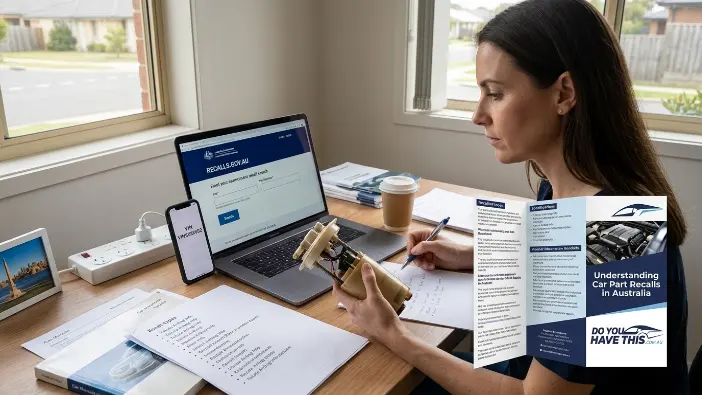
Most drivers assume a recall only happens to the car as a whole, a steering issue, a braking fault, something dramatic enough to make the news. In reality, a large share of recalls in Australia is about a single part: an airbag inflator, a fuel pump, a seatbelt buckle, or a tow bar bracket.
The car itself might be perfectly fine; it's the component bolted into it that's the problem. That distinction matters, especially if you've installed Second Hand Car Parts, because it means a car part recall check in Australia isn't something you do only when you buy a car.
It's something worth checking periodically, particularly if you've had aftermarket parts fitted or bought a vehicle secondhand.
The good news is that checking is free, doesn't take long, and doesn't require any special knowledge. The confusing part is knowing where to look, because there are several different systems in Australia that all use the word "recall," and they don't all cover the same thing.
What a Car Recall in Australia Actually Means
So, what is a car recall in Australia, exactly? It's a formal process where a manufacturer, importer, or supplier identifies that a vehicle or component doesn't meet safety standards or carries a risk of injury and takes action to fix it. This isn't the same as a routine service campaign or a minor software update issued for convenience. A recall specifically relates to safety or regulatory compliance.
In Australia, recalls are governed under the Road Vehicle Standards (RVS) legislation, which is administered by the Department of Infrastructure, Transport, Regional Development, Communications, Sport and the Arts.
When a vehicle or component is recalled, the department publishes a recall notice on the Vehicle Recalls website, where owners can enter their vehicle details to check whether their car is affected.
There is also a separate process through the ACCC's Product Safety Australia for consumer products connected to vehicles that aren't formally classified as approved road vehicle components, such as quad bikes, child car restraints, or caravan fittings.
This information is also valuable for anyone buying replacement components through a second-hand car parts marketplace. Before purchasing or installing a used part, it's worth checking whether that component has been subject to a safety recall. Taking this extra step can help ensure you're not unknowingly fitting a recalled part that could compromise your vehicle's safety or compliance.
That split is one of the more common points of confusion. The ACCC publishes voluntary consumer product safety recalls reported by suppliers, which include vehicle-related items that aren't approved road vehicle parts, for example, accessories like child car restraints, or caravan and camper fittings related to human occupation rather than the vehicle itself.
Everything that counts as an actual vehicle or vehicle component recall, on the other hand, runs through the Vehicle Recalls website.
How Does a Car Recall Work in Australia?
Understanding how a car recall works in Australia helps explain why checking matters, rather than just waiting for a letter to arrive.
The process typically starts with the manufacturer or supplier. If they determine a vehicle or component doesn't comply with the relevant safety standards, they're expected to begin voluntary recall action as soon as possible to prevent potential injury.
Most recalls in Australia are voluntary in this sense: the company identifies the issue itself, often after reports from owners, dealers, or international markets where the same part is used.
Once a recall is issued, the supplier is responsible for contacting affected owners. If your car is part of a recall, the manufacturer will usually notify you directly, by post, email, or sometimes SMS if they hold those details. In most cases, you'll be asked to bring the vehicle to the manufacturer or an authorised dealer to have the issue fixed at no cost.
That sounds straightforward, but there's a gap a lot of people fall into: the notification system relies on the manufacturer having your current contact details. If you bought the car secondhand, if you've moved house, or if the previous owner registered the vehicle under different details, the letter might never reach you.
This is exactly why it's worth checking proactively rather than assuming you'll be told if you've moved or haven't updated your registered address; you may not receive the notification, which is why regularly checking the Vehicle Recalls website is recommended.
How to Use vehiclerecalls.gov.au
This is the main government tool for a car part recall check in Australia, and it's worth understanding how it's structured before you use it.
The Vehicle Recalls website lets you search and view recall notices for Australian road vehicles and approved road vehicle components. You can search in a few different ways:
By make, model, and year.
This is the simplest method if you don't have your VIN handy or if you're researching a car before making a purchase. The site allows you to search for vehicle recalls by entering the make, model, and year of the vehicle. This is particularly useful when you're reviewing a used car listing and want a quick idea of whether that model has a history of recalls before you've even inspected it in person.
If you're comparing different vehicles or planning future repairs, it's also helpful to review a Car Suspension Parts Guide and other maintenance resources alongside the recall history. Understanding the major components of a vehicle can help you ask better questions during an inspection and identify whether any recalled parts may affect the car's safety or performance.
By browsing all current recalls.
The site also has a section where you can browse all recall notices that have been published, which is a reasonable way to scan recent activity across brands if you're not searching for something specific.
By VIN, often through the manufacturer's own portal.
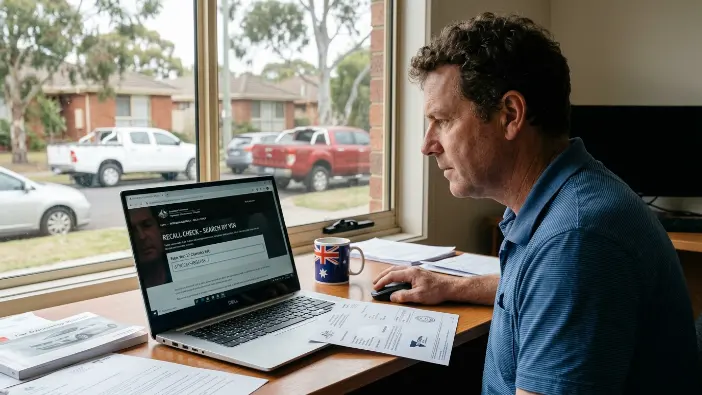
A vehicle recall check by VIN in Australia is usually the most precise method because it matches the search to your exact vehicle rather than a general make and model. Many manufacturers provide their own VIN-based recall checkers that connect to the same underlying recall information.
For example, Mitsubishi's recall portal allows owners to enter their Vehicle Identification Number (VIN) to find out whether their vehicle is affected by an active recall.
The VIN is also the best way to confirm whether a specific parts recall, such as an airbag inflator affecting only certain production dates, actually applies to your vehicle. Even two cars of the same model year can fall on different sides of a recall depending on when they were manufactured.
This level of accuracy is especially important when sourcing replacement components, including vintage car parts Australia enthusiasts often rely on for classic or older vehicles. Before purchasing or installing any replacement part, it's worth confirming that neither the vehicle nor the component has been affected by an outstanding safety recall.
Recall notices themselves usually include a fair amount of detail once you find the right one. A typical listing shows the recall number, the affected make and model, the year range, the number of affected units, and a plain description of the fault.
As an example, one recent notice for a Hyundai model explained that due to a software issue, the forward collision avoidance system could continue applying sudden or unexpected braking even when it was no longer needed to avoid a collision, which could increase the risk of an accident. That level of detail is what lets you judge whether a recall is something to act on immediately or something more procedural.
Where the VIN Comes In
If you're trying to find your VIN to run a recall check, you'll usually find it in one of three places: visible through the windscreen on the driver's side of the dashboard, inside the driver's door frame or door jamb, or printed on your registration papers or owner's manual.
It's a 17-character code, and accuracy matters. Even a single incorrect letter or number can return no results or, worse, results for a different vehicle, creating the false impression that your car isn't affected by a recall.
It's also worth knowing that a VIN does much more than identify recalls. It connects to records covering a vehicle's ownership history, accident history, registration details, and recall status, making it the standard reference point for many vehicle-related checks.
If you're replacing a recalled component, it's also a good idea to understand
the difference between OEM and aftermarket car parts. Knowing which type of replacement part is appropriate can help you make informed decisions about quality, compatibility, and compliance, especially when maintaining or repairing your vehicle after a recall.
Common Mistakes People Make When Checking for Recalls
A few patterns show up again and again, whether in forum discussions or in the kinds of questions dealers get asked.
Assuming no letter means no recall.
As covered above, notification depends on having the correct contact details on file. Plenty of people only discover a recall when they happen to check the website, not because anything arrived in the mail.
Checking only once, at purchase.
Recalls can be issued years after a vehicle was built, often once a fault pattern becomes clear from real-world use. A car that was "clear" three years ago might not be clear now.
Confusing a recall with a routine service bulletin.
Manufacturers sometimes issue technical bulletins for known issues that don't rise to the level of a formal safety recall. These aren't the same thing, and they're not always free to address, so it's worth checking the official recall notice rather than going on dealer-speak alone.
Overlooking aftermarket or replacement parts.
If a part was replaced outside the original supply chain, say, a non-genuine alternator or an imported component, it may not show up the same way in a VIN-based search, since that search is built around the vehicle's original specification.
Aftermarket parts can themselves be subject to separate recalls under different reporting paths, which is part of why the ACCC's broader recall list is also worth a glance for accessories and non-standard fittings.
Why a Careful Check Matters More Than People Expect
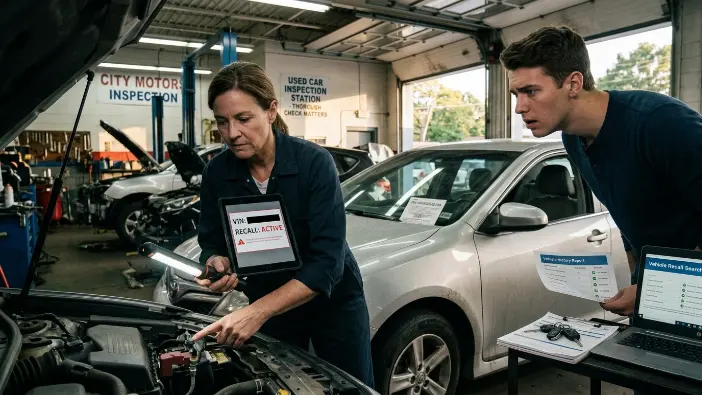
It's tempting to treat a recall check as just another item on your checklist, but its real value lies in identifying safety issues that might otherwise go unnoticed. Buying a used car is one of the best examples.
At that stage, you usually don't have a relationship with the manufacturer, won't have received previous recall notifications, and may have no way of knowing which repairs have already been completed. Spending a few minutes checking the VIN or at least the make and model before finalizing the purchase can help you avoid unexpected safety concerns later.
The same logic applies if you've owned your vehicle for years without any problems. Recalls aren't static; new ones are issued as manufacturers identify defects, sometimes long after a vehicle first goes on sale. A car that had no outstanding recalls when it was new isn't guaranteed to remain unaffected throughout its lifetime. Components are often shared across multiple models, so a defect discovered in one vehicle can eventually lead to recalls for others using the same part.
If repairs are required after a recall, some owners also choose quality recycled components where appropriate, recognizing that used car parts are better for the environment because they help extend the life of existing materials and reduce waste. However, regardless of whether a replacement part is new or recycled, it's important to confirm that it meets the required safety standards and is not itself subject to a recall.
conclusion
A car part recall check in Australia isn't complicated, but it does help to know which tool covers what. For vehicles and approved components, the Vehicle Recalls website is the authoritative source, searchable by make, model, year, or VIN.
For vehicle-related accessories and consumer products, the ACCC's product safety listings fill the gap. Running a check by VIN gives you the most accurate result, particularly for parts affected only in certain build periods, while a make-and-model search is a reasonable starting point if you're still deciding on a car.
If you're researching a vehicle before you buy, or just want peace of mind about the car you already drive, it's worth setting aside a few minutes to run that search directly rather than relying on a dealer's word or an old notification that may never have arrived.
FAQs
Is checking for a car recall in Australia free?
Yes. Both the government's Vehicle Recalls website and most manufacturers' VIN-checking tools are free to use and don't require you to create an account or provide payment details.
How do I find my car's VIN if I can't see it on the dashboard?
Check the driver's-side door frame or doorjamb, your vehicle's registration papers, or the owner's manual. If none of those are accessible, the seller or your state's road transport authority can usually confirm it.
What happens if my car is found to be part of a recall?
In most cases, the manufacturer or an authorised dealer will repair the affected part free of charge. You'll typically be contacted to arrange a time, or you can reach out directly once you've confirmed the recall applies to your vehicle.
Does a recall mean my car is unsafe to drive right now?
Not always. Some recalls ask owners to stop driving immediately, while others are precautionary and allow continued use until the repair is booked. The recall notice itself will specify which applies, so it's worth reading the details rather than assuming.
Can a part be recalled even if my car model isn't on the recall list?
It's possible, particularly with shared components used across multiple models or brands. This is one reason a VIN-based search is more reliable than a model-based one: it reflects what was actually fitted to your specific vehicle.