How to Know When Your Car Alternator Is Failing
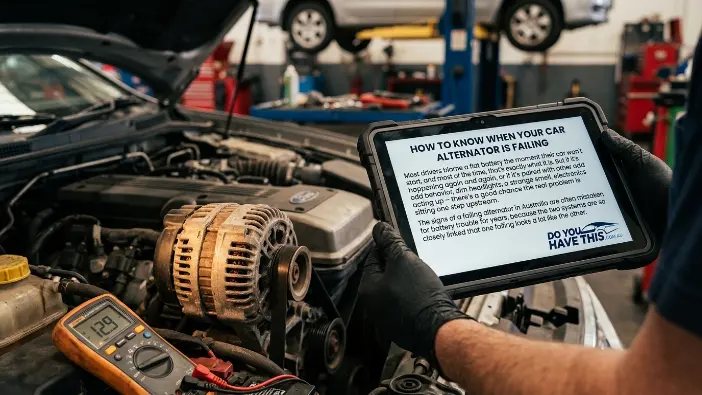
Most drivers blame a flat battery the moment their car won't start, and most of the time, that's exactly what it is. But if the problem keeps happening, or it's accompanied by other unusual symptoms such as dim headlights, a burning smell, or electrical accessories behaving unpredictably there's a good chance the real issue is one step upstream
The signs of a failing alternator in Australia are often mistaken for battery trouble because the two systems work so closely together that one failing can easily mimic the other.
That mix-up matters. Replacing the battery when the alternator is actually at fault may only solve the problem temporarily, leaving you with another flat battery a few weeks later.
Understanding what the alternator does and recognizing the warning signs early can save both time and unnecessary expense. If you're unfamiliar with how the charging system works, a Car Electrical Parts Guide Alternators can also provide a helpful overview of the alternator's role, common failure symptoms, and what to look for before replacing any components.
What the Alternator Actually Does
The alternator's job is simple in concept: once the engine is running, it converts mechanical energy from the engine into electrical energy, which recharges the battery and powers everything electrical in the car headlights, infotainment, power windows, the lot. The battery's role is really just to get the engine started and to act as a buffer; after that, the alternator is supposed to carry the electrical load.
When the alternator works properly, the battery should stay topped up indefinitely, since the system is designed to power the engine's electrical demands as well as recharge the battery while driving. When it doesn't, the battery quietly drains, and depending on how the failure happens, you might get a sudden total loss of power or a slow decline over weeks.
One thing worth understanding early: alternator failure is rarely instant. There's a common assumption that an alternator either works perfectly or stops dead, draining the battery immediately. In reality, alternator performance tends to degrade gradually, which is exactly why the early signs are so easy to dismiss as something else.
The Early Warning Signs of a Failing Alternator
Dim or Flickering Headlights
This is usually the first thing people notice, and it's one of the more reliable indicators. If your headlights, dashboard lights, or interior lights become dim or start flickering—especially while the engine is idling it often suggests the alternator is struggling to maintain a steady electrical output
. In some cases, you may notice the opposite problem, with lights briefly becoming unusually bright before returning to normal. This can happen when the alternator's voltage regulator is no longer maintaining consistent voltage.
A simple way to check for this at home, without any special tools, is to let the engine idle while turning on the headlights, air conditioning, and radio at the same time. Watching how the headlights and dashboard respond under that added electrical load can provide useful clues about whether the charging system is keeping up.
If the alternator does need replacement, it's also worth inspecting nearby components while the vehicle is being serviced. Although they perform different functions, car body parts Australia suppliers often stock related mounting hardware, brackets, and replacement components that may need attention if they've been damaged or worn over time.
The Battery or "ALT" Warning Light
Most cars have a dedicated warning light for this, usually shaped like a battery or marked "ALT" or "GEN." If this light comes on, it's specifically telling you there's an issue with the charging system, which most often traces back to the alternator.
It's worth taking this light seriously rather than waiting to see if it goes away on its own once it stays on continuously rather than flickering, your car may effectively be running on stored battery power alone, with limited time before it runs out entirely.
It's also one of the more direct answers to a question a lot of people search for: the alternator warning light's meaning in Australia is the same as anywhere else a charging system fault, not a battery fault, even though many drivers assume otherwise.
A Battery That Keeps Dying
If you've replaced your battery recently and it's already struggling, or if you're needing frequent jump-starts despite the battery being in decent shape, that's a classic symptom of a bad alternator in Australia and elsewhere. The alternator simply isn't replenishing what the battery uses, so no matter how good the battery is, it never gets a proper charge.
This is the scenario that trips people up most often, because a dead battery feels like a battery problem. Sometimes it genuinely is that batteries do wear out after several years, and leaving headlights on overnight will flatten even a healthy one.
But if the pattern repeats after a fresh battery has been fitted, the alternator deserves a closer look before you spend money on another one.
Unusual Noises From the Engine Bay
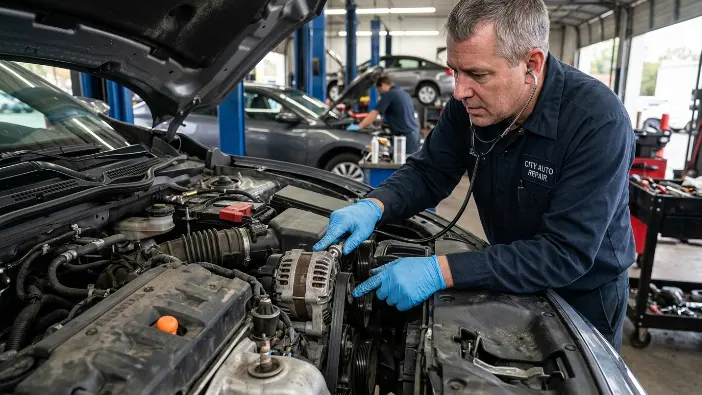
A whining, grinding, or squealing sound coming from the engine area can indicate worn bearings inside the alternator or a drive belt that's slipping or beginning to wear out. Because these noises can easily be mistaken for other engine sounds, it's helpful to pay attention to when they occur.
If the sound changes pitch as the engine speed increases or becomes more noticeable when you switch on electrical accessories, it may be coming from the charging system rather than another engine component.
If an inspection confirms that the alternator or related parts need replacing, it's worth taking the time to compare your options. Following practical tips for finding cheap car parts in Australia can help you source quality replacement components at a reasonable price without compromising on reliability or compatibility.
A Burning Smell
A burning smell from the alternator in Australia's heat-prone driving conditions is something worth paying attention to rather than dismissing as "just a hot day." It can indicate the drive belt is slipping and generating friction heat, or that the alternator itself is overheating internally, often from overworked wiring or a failing internal component.
A burning rubber smell points more toward the belt; a hot, slightly electrical smell points more toward the unit itself. Either way, it's not something to keep driving on if it persists.
Electrical Glitches That Don't Make Sense
Slow power windows, sluggish central locking, a dashboard that flickers or resets, or accessories that behave erratically are all signs that the electrical system isn't getting consistent voltage. Any one of these on its own could be something else entirely, but in combination with the symptoms above, it adds weight to an alternator diagnosis.
How to Tell If It's the Alternator or the Battery
This is the part most people get stuck on, and it's a fair question the symptoms genuinely overlap.
A rough rule of thumb: battery problems tend to show up before or while starting the car (slow cranking, clicking when you turn the key, a battery that's old or visibly corroded), while alternator problems tend to show up after the car has been running for a while, or as repeated battery drainage even when the battery itself seems fine.
If your car starts fine but then the lights dim or accessories misbehave as you drive, that leans toward the alternator. If it struggles to start in the first place, that leans toward the battery.
The most reliable way to know for certain is a proper test. A mechanic can check the alternator's voltage output under load, test for inconsistent charging using more detailed diagnostic equipment, and rule out a simple loose or worn drive belt, which can mimic alternator failure even when the alternator itself is fine. This kind of testing takes the guesswork out of it, rather than relying on symptoms alone.
Common Mistakes People Make
Replacing the battery first, every time.
It's the cheaper, more familiar fix, so it's understandable why people reach for it. But if the alternator is the actual problem, a new battery will just go through the same cycle of draining, sometimes within days.
Ignoring the warning light because the car still runs.
A car can keep running for a while on a failing charging system, especially during the day with fewer electrical loads switched on. That doesn't mean the issue has resolved itself, it usually means you're on borrowed time before a more inconvenient failure, like being stranded at night with the lights and heater both drawing power.
Assuming a belt issue is an alternator issue, or vice versa.
Since a loose or worn belt can produce nearly identical symptoms to alternator failure, it's worth having both checked together rather than replacing the alternator only to find the belt was the actual cause.
Driving on it longer than necessary.
Once the symptoms are clearly there, continuing to drive without addressing them increases the risk of being left without power unexpectedly, often somewhere less convenient than your own driveway.
Why a Proper Diagnosis Matters
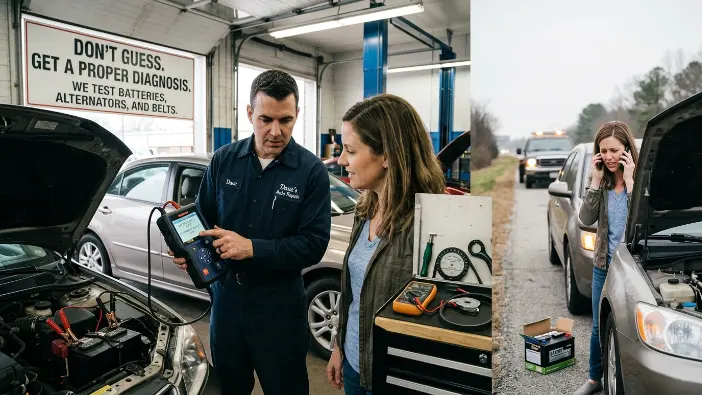
It's tempting to guess, especially when arranging a tow or visiting a workshop feels inconvenient. But alternator and battery problems are often difficult to diagnose based on symptoms alone, and guessing incorrectly can end up costing far more than a proper inspection.
Replacing a battery when the alternator is actually failing may leave you facing another breakdown, additional repair costs, and unnecessary frustration.
A professional load test, charging system output check, and a quick inspection of the drive belt can usually identify the real cause of the problem within minutes. That certainty is far more valuable than relying on trial and error.
If testing confirms that the alternator needs to be replaced, many drivers look for cost-effective alternatives. Before purchasing a replacement, it's worth learning how to buy second-hand car parts safely online so you can choose reliable, compatible components from reputable suppliers while avoiding parts with an unknown history or questionable quality.
conclusion
A failing alternator rarely announces itself with one obvious symptom. It's usually a combination of dimming lights, a battery that won't hold charge, an odd noise or smell, electronics behaving strangely that builds gradually rather than all at once. Recognizing the pattern early, rather than waiting for the car to simply not start one morning, gives you time to get it properly tested and sorted before it leaves you stranded.
If you're noticing two or more of these signs together, it's worth getting the charging system checked rather than replacing parts on a guess.
FAQs
How long can I drive with a failing alternator?
It depends on how far the alternator has degraded, but generally, you shouldn't plan on driving far once you've noticed clear symptoms. The car may run for a while on stored battery power, but that window can close suddenly, especially at night when lights and other electronics draw more power.
Can a bad alternator damage other parts of the car?
Yes, it's possible. Inconsistent voltage can put strain on the battery and other electrical components over time, and in some cases, on the engine's electrical systems generally. Getting it checked early reduces that risk.
is it cheaper to fix the alternator or replace the battery first?
It's cheaper to find out which one is actually faulty before replacing either. A proper diagnostic test usually costs far less than buying a new battery only to discover the alternator was the real issue all along.
Can I test my alternator myself without a mechanic?
You can get a rough sense by watching how your headlights and accessories behave when you load up the electrical system (lights, AC, and radio together) with the engine idling. But a true diagnosis requires a voltage and load test, which is best done with proper equipment.
Does a faulty alternator always come with a warning light?
Not necessarily. Some vehicles show the warning light early, while others show only the secondary symptoms first, like dimming lights or a weak battery. Don't rely on the absence of a warning light alone to rule out a charging system problem.