Common Reasons Australians Buy Second-Hand Car Parts (and When You Shouldn't)
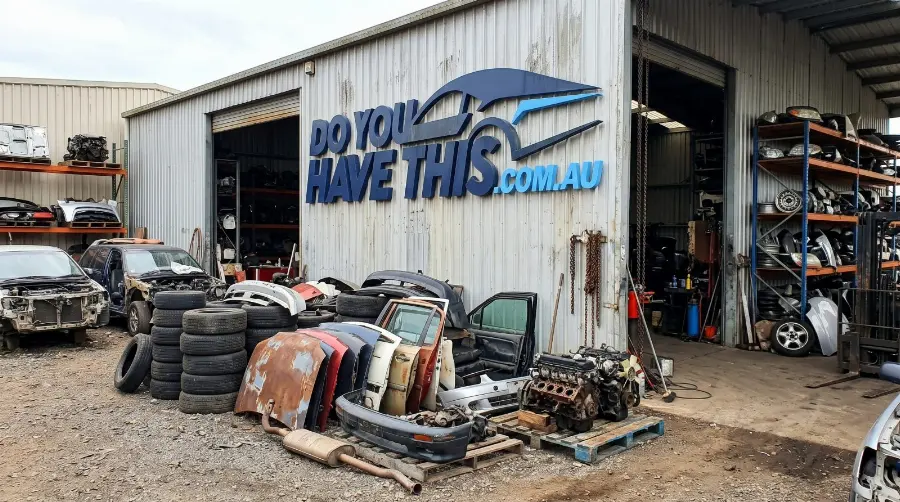
Something on your car has failed, and now you're weighing up new against used. Second-hand car parts are a smart choice for plenty of repairs, but not all of them. Knowing when to buy used car parts, and when to walk away, saves you from fitting the wrong thing twice. If you already know what you need, you can post a part request and get quotes from wreckers without ringing around.
We connect buyers with wreckers, so we'd like you to buy used. But we'd rather you got the right part. Here are the common reasons Australians go second-hand, and the parts we'd always tell you to buy new.
Why Australians Buy Second-Hand Car Parts
Lower cost on big repairs
The most common reason is simple. A used part usually costs less than a new genuine one, and the difference matters most on large parts that don't wear out quickly, like engines, gearboxes, doors and headlights. If you're replacing an engine, read our guide to buying a used engine in Australia before you commit.
Parts for older models
Many Australians keep their cars for a long time. Once a model has been out of production for a while, some new parts become hard to get or stop being made altogether. For older cars, a wrecker is often the most reliable place to find the original part.
Genuine factory fit
A used part from the same make, model, and year is the original part. It was made for your car, so it should line up and connect the way the factory intended. That's why many owners choose used genuine body panels and lights over new aftermarket copies.
No waiting on back orders
New parts aren't always in stock locally and can take time to arrive. A used part from a car that's already being dismantled can often be found and sent sooner.
Car Parts That Are Worth Buying Used
A part is usually a good used buy if it doesn't wear out with normal driving, or if you can check its condition before you pay. These are the parts most people buy second-hand without a problem:
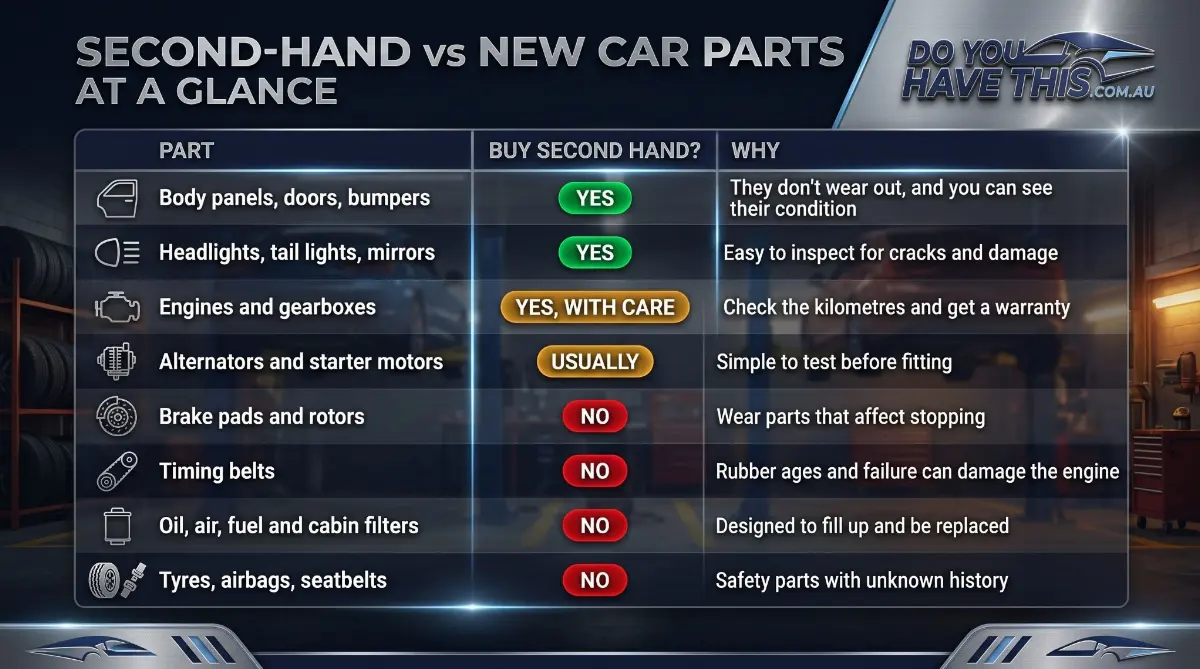
- Body panels: doors, bonnets, guards, bumpers and boot lids. The paint might not match, but the panel itself is factory spec.
- Headlights, tail lights and mirrors. Check for cracks, cloudy lenses, and broken mounting tabs.
- Interior parts like seats, door trims, consoles and dash panels.
- Alloy wheels. The rim only. Tyres are a different story (more on that below).
- Engines and gearboxes, if you know the kilometres and the seller gives a warranty or start-up guarantee.
- Alternators, starter motors and electrical modules, which are easy to test because they either work or they don't. Some modules need coding to your car, so ask before you buy.
When You Shouldn't Buy Used: Brake Pads, Timing Belts and Filters
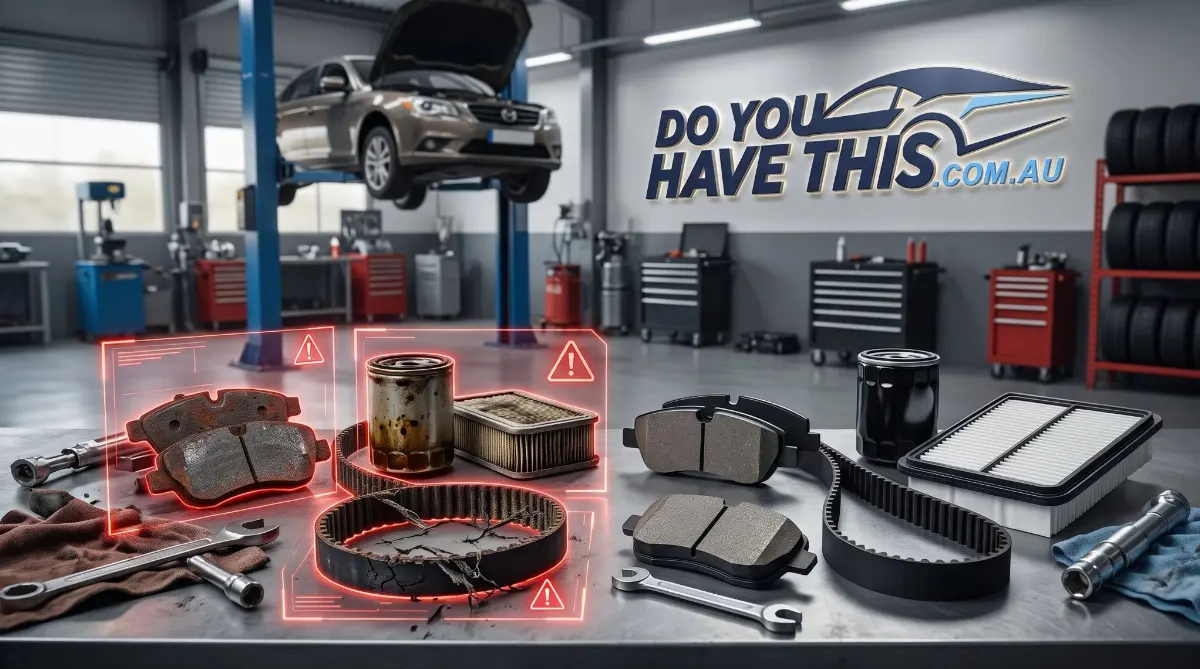
This is the part most used-parts sellers leave out. Some parts are designed to wear out, and some keep you safe on the road. Buying these second-hand gains you very little and adds real risk.
Brake pads
Brake pads wear down every time you stop. With a used set, there's no way to know how much material is left, how hot they've been, or whether oil or brake fluid has soaked into them. Your stopping distance depends on brake pads, so always fit new ones. The same goes for brake rotors that are close to their minimum thickness.
Timing belts
A timing belt is made of rubber, and rubber ages over time even when the car isn't driven much. That's why manufacturers set a replacement interval in both kilometres and years. A used timing belt has no reliable history. On an interference engine, a belt that snaps can let the pistons hit the valves and cause serious engine damage.
Most of the work in a timing belt job is getting to the belt. Fitting a used one means you may be paying for the same job again sooner than you planned. Mechanics normally fit a new timing belt kit, which includes the tensioner and idler pulleys.
Filters
Oil, air, fuel, and cabin filters are built to trap dirt until they're full. A used filter has already done part of its job, so it has less life left. Filters are quick to change and easy to buy new, so a second-hand one doesn't make sense.
Other parts to buy new
Tyres also belong on this list. Their age and any internal damage are hard to judge by looking at them. Airbags and seatbelts are safety systems with a history you can't easily check, so buy them new. Rubber hoses, drive belts, and spark plugs wear out with use, so it's best to replace them with new parts too.
What to Check Before Buying Used Car Parts
We cover this step by step in our guide to buying second-hand car parts safely online. The short version:
- Match the part number or VIN, not just the model name. The same model can use different parts depending on the year, engine, and variant.
- Ask how many kilometres the donor car had done, especially for engines and gearboxes.
- Get the warranty and return terms in writing before you pay.
It also helps to know your rights. Under the Australian Consumer Law, consumer guarantees apply to second-hand goods bought from a business, taking their age and condition into account. Private sales aren't covered in the same way.
Finding Second Hand Car Parts Near You
Whether you're searching for car wreckers in Brisbane, second-hand car parts in Sydney, or used car parts in Melbourne, Perth or Adelaide, the hard part is finding a wrecker that has your model. Instead of calling yard after yard, you can post one request with your make, model, year, and the part you need. Sellers who have it can reply with a quote and confirm the VIN, part number, and compatibility before you buy.
Buy Used or New? Get the Right Part the First Time
Here's the simple rule. Buy second-hand car parts for durable parts like panels, lights, engines, and gearboxes, where you can check the condition and the part should fit like the original. Buy new for anything that wears out by design or keeps you safe: brake pads, timing belts, filters, tyres, airbags and seatbelts.
Not sure which way to go with your part? Contact us with your make, model, and the part you're after.
Frequently Asked Questions
Is it safe to buy second-hand car parts?
Yes, for most body, interior, and mechanical parts, as long as the part matches your VIN or part number. Wear parts and safety parts should be bought new.
Which car parts should you always buy new?
Brake pads, timing belts, and filters, because they wear out and you can't tell how much life a used one has left. Tyres, airbags, and seatbelts should also be bought new.
Is buying used car parts worth it for an older car?
Usually, yes. New parts for older models can be hard to find, and a wrecker will often have the original part.
Do second-hand car parts come with a warranty in Australia?
Many sellers offer a warranty, so ask for the terms in writing. Under the Australian Consumer Law, consumer guarantees also apply to second-hand goods bought from a business.
How do I find second-hand car parts without calling every wrecker?
Post one part request on DoYouHaveThis and let sellers with your part come to you. If you have a question about your request, get in touch through our contact page.